
After SMRT introduced their Enviro500 double deck buses on July 2014, we all thought that it's gonna be the only model that SMRT's gonna operate for a while.
Turns out it isn't gonna be the case in about 4 months time....
 |
| SMRT's Enviro500 double deck! Though it quickly became not to be the only SMRT double deck in service in 4 months time. |
 |
| MAN Lion's City Double Deck meets Alexander Dennis Enviro500! |
 |
| MAN meets MAN! |
The MAN Lion's City Double Deck was introduced as part of a one year trial at the request of MAN - this is an excerpt of the official post by SMRT on their Facebook page.
"We confirm that SMRT Buses will put on trial one new MAN double-deck bus at the manufacturer's request. The trial w
ill last a year. This is part of our ongoing effort to test new bus models. Our commuters have welcomed the addition of double-deckers to our growing fleet of buses to meet increased demand." - https://www.facebook.com/SMRTCorpSG/posts/821427307878500
Bodied by Gemilang, it is promoted under the MAN Lion's City branding as a complete bus. There was a prototype that was spotted with a Lion's City Double Deck design in white though the fate of that vehicle is unknown.
 |
| MAN Lion's City Double Deck! |
 |
| The MAN Lion's City Double deck, supposedly in pseudo-old SMRT livery without the SMRT logo apparently painted in grey (or edited?) |
The right hand drive version of the Lion's City Double Deck has subtle change in design, most notably the top of the front and rear of the bus. Most notably, the front upper deck windscreen is and the top of the rear window is curved.
 |
| Upper deck rear window being slightly curved. Though the bottom half is similar to that of its European cousin. |
For those that find the front design familiar, it has design cues that were based off an earlier Gemilang bodied double deck bus that entered service with SBS Transit -
SBS7777Y.
 |
| Some of the the design cues came from this bus which was also bodied by Gemilang - even some of the interior too. |
An aesthetics change is at the front - instead of silver under the windscreen, it is black! Does look better as compared to the ones we've been seeing on the MAN buses.
 |
| Black under the windscreen, making the MAN front bumper stand out! |
 |
| As compared with the existing MAN bus paintjob. |
Originally thought to be a new Mobitec signage, it turns out to be an Aesys signge.
 |
| The front signage is by Aesys - a first for SMRT Buses. |
The offside has a unique feature - though it is not visible at all from the exterior.
 |
| Spot the extra window at the staircase area. |
 |
| Spot the window? |
 |
| And it's the first public bus to have 3 signal indicators per side for the rear of the bus. |
 |
| And finally it enters service on 190 |
And if the interior looks similar - it's because it is also based off the Gemilang bodied Volvo B9TL, which sees the adjustable aircon outlet making an appearance on the Lion's City double deck too.
 |
| The interior is a mix of the MAN NL323F layout, SBS7777Y style design (including the ster New City seats) |
 |
| Similar. |
Closer look at the rear half
 |
| The upper deck is pretty similar to SBS7777Y too. |
 |
| The upper deck of SBS7777Y |
 |
| Similar to MAN NL323F! |
The wheelchair bay has no foldable seat on the wheelchair cushion though....
 |
| The wheelchair bay, no foldable seat this time round - just a cushion. |
 |
| Following the Enviro's 3 side facing seat arrangement. |
 |
| Double exit! |
 |
| The staircase, with a padding at the bottom of the steps to mitigate impacts if you slip and fall. |
 |
| The front upper deck windscreen of the MAN Lion's City Double Deck! |
 |
| The front half of the bus~ |
The ride is pretty comfortable and smooth, with the upper deck being very quiet. If you've rode the MAN buses in SMRT's fleet, you've pretty much rode the double deck (kind of) :P


 Quite a long while ago, SBS Transit donated SBS7297R, a Volvo Olympian 2 axles non air-conditioned double decker bus to the I Love Children organisation, and it was converted into a mobile gallery vehicle to promote about parenthood.
 |
| Not around anymore - it's been scrapped. |
The bus was retired and another replacement vehicle was donated by SBS Transit - this time round, a single deck bus in the form of a Volvo B10M MK IV with DM3500 bodywork.
 |
| Close enough. SBS2788Z. |
And converted to the new MILK bus!
 |
| And hi there! On its first day and first display |
So like its predecessor, most of the exterior of bus remains the same, though with modifications to accommodate for the mobile gallery setup. The exterior remain mostly unchanged, though with a new paint job. The doors now have a manual lock system so that people don't break in to the bus.
 |
| In general, not much has changed...But try to spot the missing feature on the bus. (Hint, no passengers are taking this bus anymore, so there's no need for the original bus cooling in the interior). |
Though most of the original bodywork is retained, modifications were made to the bus.
 |
| Sutrak aircon system is removed, because it's too mainstream. Sort of. |
 |
| The rear now houses a grille and an input for the power from an external generator. |
While the rest are kept intact
 |
| Familiar bus is familiar |
 |
| Unlike Molly the Library bus, the rear view mirrors are not replaced with the bigger housing type & two mirrors. |
 |
| Its former identity still remains. |
 |
| The rear, mostly intact, but with a grille and stuffs. |
 |
| A new coat of paint - and the safety devices that keep the nuts tight from the SBS Transit days is retained. |
 |
| Same for the rear axle & rim. |
The wood flooring concept is retained, and now is in a much lighter colour compared to the Volvo Olympian wood flooring.
 |
| The flooring is now light brown wood style, and there's an additional step to compensate for the islands and engine hump which used to have seats mounted on it. It's to give it a flat floor in the gallery mode. |
The identification plates.
 |
| For the chassis plate lovers. |
 |
| The driver cab, minus the revenue equipments. The blue driver seat had been changed, complete with an armrest and a seatbelt. Yep, the Duple Metsec badge is still retained. |
The whole interior is changed to a warm colour, to the tone of light orange.
 |
| Seat. With seatbelt. And armrest. |
 |
| The Volvo B10M dashboard. |
 |
| Everything is mostly retained as well. |
 |
| Where the revenue service equipments & coinbox used to be. |
 |
| And where the farecard reader and wires used to be. |
 |
| Chassis plate at the top. |
 |
| No more bus stopping. |
 |
| Entrance! |
And into the bus....
 |
| The interior of the bus. Yep, flat floor, 3 steps entry & exit. |
 |
| The Doors Closing is removed. |
 |
| Rear to front view of the gallery |
 |
| An additional step after the standard 2 step from the original DM3500 body configuration. |
And there you have it - the new I Love Children bus mobile gallery. For the appearances and its schedule, do check out this site @
http://www.ilovechildren.org.sg/bus-schedule/bus-schedule.html
 |
| In its display mode at Harbourfront |

 |
| 5 times 7 |
Possibly one of the most unique demonstrator registration plate given to a bus - SBS7777Y breaks two "traditions" of sorts. One, no auspicious links to the digit 3 or 8 in the Chinese auspicious culture since the introduction of wheelchair accessible buses, and two, the first Volvo B9TL 100% low floor bus to be registered (back) in the 7000 series registration plate, which were allocated for the low entry ComfortDelgro Engineering &
Wright Eclipse Gemini II bodied Volvo B9TL.
There are registration plates where the 4 numbers are of the same digits registered for the new generation low entry/low floor SBS buses - but they are not demonstrator buses.
 |
| SBS3333X. Not a demo. |
 |
| SBS6666R. Not a demo either. |
 |
| SBS8888D - the only Euro IV K230UB in the entire SBS fleet with an 888X series registration plate (which that series later became the Euro V batch of buses). Nope, not a demo too. |
And as of date, only SBS6666R managed to be deployed on the same number service 66 like how SBS7777Y is deployed on service 7 for its first service.
The bus is bodied by Gemilang and is configured to be a 100% low floor bus like its Wright bodied cousin, and the guesses that the registration was to be SBS3888L (3000 series low floor bus, 888 for auspiciousness). It didn't happen, and this is a very wild speculation of what might have happened (some food for thought).....
 |
Maybe....? SMB388S, SBS3888L. A tad too similar? High capacity bus bodied by Gemilang too. Hmmm.....
This bus is a MAN NG363F also bodied by Gemilang, marketed by MAN as a Lion's City GL bus. We may never know. |
And a bit more history on the fleet of Volvo B9TL to date.
 |
| Euro 3 Volvo B9TL, low entry configuration, Comfort Delgro Engineering bodywork (first wheelchair accessible public bus) |
 |
| SBS7500D, first Wright bodied Volvo B9TL Euro 5, low entry configuration. |
And probably/maybe because of the introduction of SMRT's 100% low floor MAN NL323F A22 buses, the batch of Wrights became low floor.
 |
| SBS3000 series Wright bodied Volvo B9TL Euro 5, 100% low floor. |
And a slightly updated version of the 100% low floor Wright bodied configuration later on - the rear view mirrors are electronically operated, the emergency exit window stickers were changed from translucent/red wording to green stickers with white lettering. The door systems were also updated to the kind that you have to twist and pull the knob to release pressure in an emergency.

Back on the SBS7777Y, this is the same B9TL Euro 5 spec chassis but with a different bodywork, designed by Gemilang Coachworks of Malaysia and it is based off an earlier bodywork (and their first in-house double decker bodywork) on a Scania K310UD for SBS Transit.
 |
| This was what SBS7777Y's bodywork design is based off - and yes, the Gemilang bodywork design is very unique for SBS7888K! |
 |
| No mistaking of SBS7777Y with SBS7888K! |
 |
| The front bumper and bottom half - it sees the introduction of a new feature that's sort of present on the Wright bodywork (though apparently configured to be part of the headlamps set rather than standalone - the Daytime Running Lamps). Those 5 dots on both left and right side that's lighted up. |
Even though SBS7777Y's general bodywork style/design language was based off SBS7888K's, it has its own distinct identity and design language that sets it apart from SBS7888K. The front styling, including the bottom half is based off SBS7888K, but instead of grey, it's white. And it has that subtle Volvo slash that gives the bus its awesome character. The whole bus at first glance from the front gives a very premium feel to anyone who sees it.
There are changes to its headlamps design, the way the lamps are shaped and spaced out. It's also probably the first public bus in recent history that sees the orange indicator lights so close to the windscreen.
 |
| SBS7888K's rear. |
 |
| The design language that they kept off SBS7888K's rear is that epic black area that is pretty stunning, and the rear tail lamp area - though lacking in some visual impact as compared to SBS7888K. . |
And as compared to the Wright or ComfortDelgro bodied B9TLs, this is also the first B9TL to have many badging for the front, side and rear (!) - including the first ever model badge at the rear (B9TL Euro 5)! Though originally the rear did not come with any badging and there was no space to put a white SBS Transit logo, so probably the badging is to give it some visual appeal against a plain and frankly not so striking rear....?
Add the awkward looking grille at the engine cover, and the awkwardly painted red colour at the tail lamp area (it was originally unpainted), it doesn't look particularly attractive. Though the engine grille cover is shaped that way for the B9TL's engine to vent its heat out more efficiently (?).
The driver's cab is pretty standard, probably following the Wright styling.
 |
| The driver's dashboard & controls |
 |
| The CCTV monitor & LECIP electronic signage controller - with a light for the driver. |
Now on to the interior, the general layout for the three bodywork variant of Volvo B9TL is about the same.
 |
| Lower deck of the ComfortDelgro Engineering bodied Volvo B9TL, low entry |
 |
| The layout is the same as the ComfortDelgro Engineering bodied B9TL. |
 |
| No your eyes aren't playing tricks, this isn't a duplicate photo. It's the 100% low floor configuration (with two pairs of side facing seats brought to face front and placed at the low floor area, while the footrest area for those two seats became the area for mounting of the seats. |
And enter SBS7777Y's lower deck. Deja vu? The air conditioning system is supplied by Denso by the way.
 |
| You'd be forgiven to believe this is a Wright bodied Volvo B9TL at first glance - but there's subtle differences that makes it different from the Wright bodied buses such as the grab poles layout and design. |
Fast forward the upper decks, layout's about the same as well -
 |
| Upper deck of ComfortDelgro Engineering body B9TL |
 |
| Upper deck of Wright body B9TL |
 |
| You'd be forgive if you mistook this as a Wright bodied B9TL upper deck as well at first glance, though there's an additional pair of seats added (like the lower deck) to give a total of 57 seats instead of 55 seats.. |
It's not too surprising that the Gemilang bodied Volvo B9TL's interior is based off the Wright bodied Volvo B9TL - SBS Transit would probably be also wanting for passengers to have a consistent experience on their buses while travelling.
But even though it is based off the Wright bodied interior, it has its own distinct characteristics that set it apart from many other buses.
 |
| SBS7777Y & Volvo for life! Along with a cool bus captain! |
 |
| Again, forgiven if you mistook this as a Wright bodied B9TL at first glance :P |
Those grey poles thing at the entrance & exit doors also made it to the Gemilang design, though it is of a different design. And speaking of the doors, they are SMC Transit door systems.
The seats are supplied by Ster, called the
New City, instead of the usual
Vogelsitze System750 seats.
 |
| Instead of individual seat frames mounted to the side for the priority seats, the seats are attached on an island mould as one unit. |
 |
| And that unit is moulded with the wheel arch cover for the front left wheel. |
 |
| The wheelchair bay & standee area - the backing for the cushion is not black and glossy like the Wright bodied design, instead it is a matt finish and is of a light shade of brown. |
Also to note is that there is an extra pair of seats (one on each side) of the side facing seats above the second axle to make up four side facing seats. On the 100% low floor Wright bodied B9TL, this would have been a 3 side facing seats configuration above each wheel.
 |
| And the rear half of the bus - and yes, there's only four individually mounted seats on the lower deck, the rest are on the islands as part of the bus interior configuration. |
 |
| Maybe it's to give the bus a more integrated feel by having the seats on the island moulds instead of individual seat frames. Those grab poles replaces the missing seat handles that are used by passengers. |
And moving on to upper deck.
 |
| The staircase. |
 |
| In case someone falls while going downwards, there's a grey cushion mounted there to soften the impact. |
 |
| This is how it looks like from the back to front. |
 |
| The Ster New City seats. |
 |
| The rear window feels very Alexander Dennis Enviro-inspired.... |
 |
| And this is how the front looks. |
Something that is unique here is the pair of poles at the front - usually there is only one pole across the front upper deck's windscreen for most of SBS Transit's double deck buses. Not sure why though.
 |
| Double poles. |
And as for the ride - it's about the same as the other Voith gearbox Volvo B9TL buses, just the interior aesthetics are different.
 |
| The first Gemilang bodied citybus & the latest Gemilang bodied citybus for SBS Transit. |
 |
| Meeting its Wright bodied cousin |
 |
| When it was doing its test run/driver familiarisation. |
 |
| That paper on the bus door says "Do not move this bus". The irony is, it's being moved. |
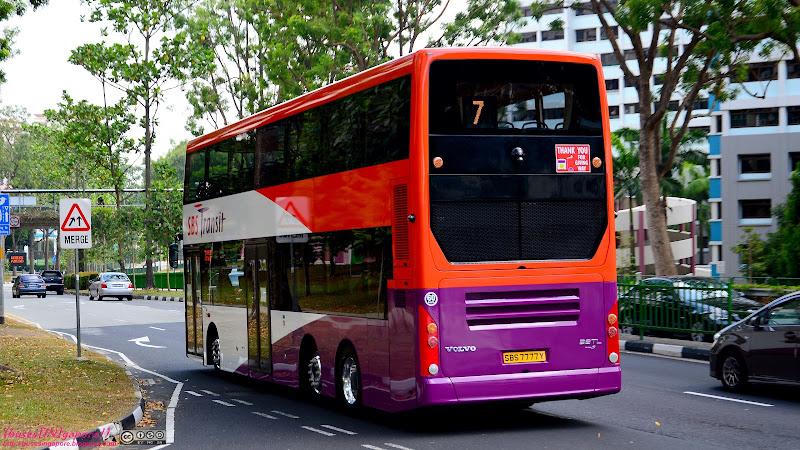 |
| The rear - the black aircon grille is more easily seen here. |
 |
| The rear and right side - shiny Alcoa rims now take the stage. |
In conclusion - This bus looks awesome at the front & side - that front lower half really gives that premium feel for the bus, something like how the Mercedes Benz Citaro does with its design. Interior feels pretty good too. The front with the Volvo slash is very subtle & striking, with the off centre Volvo badge below the driver's cab area catches the eye too!
 |
| That premium feel..... |
The same can't really be said for the rear design.
 |
| The rear is rather plain at best, and without the badging and the extra red paint on the tail lamp area, it'll be having less visual impact on the roads. |
Overall, wow. Gemilang's design for this bus is pretty good!
 When SMRT's new livery was first spotted, the first reaction was "What the heck is that gap in the middle portion on the bus?".
 |
| Cue Counterstrike explosives on the design computer. |
The digital matrix effect, pixels, magic dust, splash effect whatever that people call them that was scattered over the wheels, seemed like as if someone had planted some virtual C4 explosives and and blew the livery up at that portion.
 |
| This was probably the original idea. Probably. |
The odd combination of yellow, red "orange lookalike" and black on a sliver background looks pretty nice, but as usual, after getting used to it. Sliver/light grey was like an odd choice for a base colour, usually only private bus operators will opt for it. When Singapore Bus Services transited (pun intended) to SBS Transit, the white from the red & white livery was retained while introducing a new design & a new colour - purple.
And the left side looks slightly plain as the effect is interrupted due to the doors. Admittedly it probably could be executed better given that it's the side that most of the passengers will see.
 |
| The left side of the new livery - the aircon pod was also painted black after the first photos were captured. The front Citaro badge however did not make it back to the bus |
But sliver gives a very unique effect - the bodywork of the bus suddenly looks very premium, something of the effect that you'll get from cars. And it might hide the dusts and dirt better than white, which was showing them up pretty easily.
Also of note is the inclusion of black paint on the electronic signage area for the electronic signage, might be due to visibility reasons.
 |
| Dirt & dust shows up very easily on the white bodywork, giving the look and feel of the bus being less well maintained. |
Note that the first bus we talked about was the Citaro, SMB140P. That's because (in my personal opinion) it's the nicest looking after the new paint job. The MAN & OC500LE feels weird, especially due to the front (and for the back in the OC500LE). Even though some time have passed, the front of the MAN & OC
still seems a bit weird, but the MAN still takes the cake for that.
Let's start of with the MAN, the only fault with the new paint job is how the lower front is rendered.
 |
| SMRT's preview for the new livery. (Just kidding). |
In the old livery, the portion below the windscreen is painted black, and it allows for the signature MAN Lion's City front design to stand out in white & red (with black bumper).
 |
| The MAN NL323F with its new paint job. Still awkward looking "grumpy" front of sorts. |
In the new livery, the black area is lost for a much bigger SMRT logo for the front which is below the windscreen. Previous test attempts by SMRT to have a larger logo while retaining the black area might have made the bus look awkward, like SMB190U.
 |
| Bigger than usual SMRT logo, but might have stood out awkwardly |
Still a case of needing to get used to it. And for the OC500LE, it was the nicest looking in the old SMRT livery until....
 |
| The old livery brings out a European "charm" for these OC500LEs. |
 |
| The front (still) looks robotic. |
The black portion of the front under the windscreen is missing, and like the MAN bus it also sacrificed the black area under the windscreen to have the SMRT logo in a more prominent position. But oddly, the Citaro's SMRT logo still remains at the same place (as the black under the windscreen is probably not able to be painted?).
And an awkward sliver area above where the red portion used to go above the housing for the Mercedes Benz logo to get a straight yellow across.
And also in a pursuit to for a bigger SMRT logo for the rear, the whole black area under the rear windscreen is completely painted over. It looks rather ugly at first but now, as with everything, get used to it.
 |
| Have to get used to it....have gotten used to it. |
Oddly, it also seems like the case where the actual bus turns out to be better than those in the photos at times, with some commenting that it does look better in person than in photos. The livery does remind of the old Trans Island livery, with its orange & yellow livery now being red (orange lookalike) and yellow with a distinctive pattern over the wheels.
As of date, only SMRT's wheelchair accessible bus types had been painted with the new livery, there was a fleet of MAN NL323F with the new livery deployed, but only SMB140P and SMB30Z from the Citaro & OC500LE fleet are painted as of now. The TIBS fleet are expected to also get the new livery for the buses that still have a substantial lifespan remaining, such as the Mercedes Benz O405G fleet.
 |
| Old or new? The new does look better at the end of the day, once you get over the initial shock of the changes made on the buses. Really love the sliver base colour for the livery. |
 |
| And as compared to the SBS Transit : SBST's livery catches the eye more easily - simple & modern. |
Jokes had been made about the new livery -
 |
| Hadouken! |
The livery look like Germany's flag, upside down....?
 |
| Germany flag? |
After the initial excitement over the new look, it's overall a bit underwhelming. Still need to get used to the new colour scheme and how some of the buses look drastically different overall. In a way, the new livery could be better implemented to the OC500LE & MAN buses while retaining and flowing with certain characteristics from the bodywork design.

The first of the Scania K230UB buses in Singapore, SBS8033D is a demonstrator bus and part of the first batch of K230UBs to be introduced on to Singapore's roads.
 |
| SBS8033D on off service. |
 |
| SBS8033D deployed on service 30. |
 |
| SBS8033D, Euro IV and Euro V/EEV front comparison. |
At the period of time, SBS Transit was probably trying out the low entry vehicles as well, so along with SBS8030L and SBS8033D (a Scania K230UB demonstrator), there was SBS8031J and "SBS8032G" as well - belonging to a MAN 18.240 HOCL-NL and possibly the Mercedes Benz OC500LE, both bodied by Gemilang. SBS8031J is no longer with SBS Transit while "SBS8032G" was never taken in by SBS Transit at all and was sold to Chitson Transport instead.
 |
| Volvo B7RLE demonstrator with Soon Chow bodywork SBS8030L |
 |
| ex-SBS8031J after it was returned back to ST Kinetics & MAN. |
 |
| Chitson Transport's PA9588S - its one and only registration today and the only OC500LE with city bus specs with a private operator as of today |
The front of SBS8033D looks to be inspired from the Scania Omnicity
Though unfortunately, the demonstrator front was replaced since 19th August 2013 with a production Euro V (updated) front that's used by the of the 600 Euro V/EEV K230UBs that makes up a larger part of the fleet.
 |
| SBS8033D with a production front. |
In fact, the rear is not original as well - the right blinker used to be lower and all the tail lights used to be smaller and used bulbs instead of the standard LEDs used on the majority of the SBS Transit fleet today to standardize the parts This makes SBS8033D have a non-original front and rear, a unique point of this bus.

At least one unique point of this bus is still around as of today - the purple themed interior.Though again, the original seat covers was changed to standardize the fleet with the Volvo Super Olympian, Dennis Trident & B10BLE's seat covers. Though the general color scheme remains the same. And unlike its production cousins, its side electronic signage is mounted a little bit up higher on the left.
It is also one of the very few buses in the public bus fleet to use non-dark tinted windows.
 |
| The purple themed interior which reflects the company's purple/red livery colours. |
As compared to the production batch which sees the interior change to a brown themed colour scheme instead, the purple is refreshing..
 |
| The production brown themed interior of the production first batch. |
The layout is mostly the same from the first batch of production units, though some improvements were made at the front half for the Euro V/EEV batch.
 |
| Extra seatng ftw. |
 |
| The driver's dashboard. |
 |
| And the dashboard on the production batch. |
Unlike its production cousins, SBS8033D feels more classy without the gloss of the production batch's interior.
 |
| The front with the bus stopping lamp. |
 |
| Where the first aid kit is stored |
 |
| The electronics bay above the driver |
 |
| The housing above the front door. |
 |
| The SMC entrance door with yellow grab poles. |
 |
| Fire extinguisher stored behind the driver cabin, with a bit of "standing space" Though later this area would be the footrest for an additional seat above the right wheel arch. |
 |
| The high wheel arch. On the production batch, they were lowered to just below the window line. |
 |
| Unlike the right side, the left wheel arch has two levels. |
 |
| The lower one is a convenient "luggage" placement for passengers standing near the door. |
 |
| The side signage housing is mounted higher than its production batch cousins. |
And also unlike the production batch, SBS8033D has two small additional windows right after the driver's window and front door.
 |
| The left window. |
 |
| The right window |
 |
| Close up of the air con duct design |
 |
| The ceiling and the purple aircon ducts. |
The bus is equipped with two wheelchair bays for passengers in wheelchair.
 |
| SBS8033D departs the old Jurong East Interchange on service 334. |

This bus is certainly, and one of the most striking public bus bodywork design when it was introduced back in 2007. It's a demonstrator but no production vehicles was brought in.
 |
| SBS8030L's left side. At first glance it doesn't look like a low floor bus due to the higher than usual window line. |
The bodywork follows Soon Chow Corporation's signature front that are used on its other products, which the front had been described as "fierce" looking. One of the very few times when a modern public bus bodywork is made in Singapore (alongside the Volvo B9TL with ComfortDelgro Engineering bodywork). Even the front paint scheme for the bumper area is unique as well!
 |
| A Scania K124IB4X2 bodied by Soon Chow |
 |
| Duck & Hippo Tours with Soon Chow bodywork. |
The Volvo B7RLE - and to date, the only unit to be with a public bus operator. The only other operator who operates the same model is Sentosa Development Corporation.
 |
| Sentosa's Volvo B7RLE in private and RU (restricted use) plates plying in various internal shuttles. They are bodied by Liannex and feature slightly shorter bodywork due to Sentosa's tight road network. |
SBS8030L is equipped with a Coolair electronic signage, Denso airconditioning and Alcoa rims which was also used on the first batch of Scania K230UB (including SBS8033D).
At the period of time, SBS Transit was probably trying out the low entry vehicles as well, so along with SBS8030L and SBS8033D (a Scania K230UB demonstrator), there was SBS8031J and "SBS8032G" as well - belonging to a MAN 18.240 HOCL-NL and possibly the Mercedes Benz OC500LE, both bodied by Gemilang. SBS8031J is no longer with SBS Transit while "SBS8032G" was never taken in by SBS Transit at all and was sold to Chitson Transport instead.
 |
| SBS8033D, still around. But not the front - we'll get to that later. |
 |
| Ex-SBS8031J, which is now sold to Dnata, in use at Changi Airport. |
Although it was never registered, it was speculated that the missing gap "SBS8032G" would eventually be registered for this bus.
 |
| Chitson Transport's PA9588S - its one and only registration today and the only OC500LE with city bus specs with a private operator as of today |
So, back on SBS8030L. It is one of the very few single deckers public buses before the introduction of the Mercedes Benz Citaro to have two LED markers at the top front of the bus. And it's the slightly odd bus with a higher than usual passenger window line for a low entry bus, resulting in a straight window line front the front to the back. The driver's window features a black portion underneath to give the illusion that the driver's window is bigger.
 |
| The odd feeling to know that it's a low entry bus but the window line doesn't give a hint about it. |
Usually, low entry buses have a low floor (deep window line, big windows) and step entry (standard/higher window line, smaller windows) due to the floor line and passenger viewing. Not in this case. To illustrate this, here's SBS8033D in the evening.
 |
| Yes, it is SBS8033D with a new front. See the difference between the low floor (just windows) and step entry (with those black things at the bottom of the window)? |
And out of all the 4 low entry demonstrator vehicles, it is the only one with no rear windows at all.

Getting on board the bus, one is immediately greeted by the warmth and comfort of the interior. SBS Transit opted for Vogelsitze's
Pino seats with yellow & green PVC seat covers. It's a huge difference as compared to SBS8033D's purple themed interior.
 |
| Warm and comfortable interior - one of the more pleasant interiors for a public bus in Singapore. |
 |
| Purple themed interior on SBS8033D - a refreshing colour scheme which didn't make it to the production batch. |
Not going to touch on SBS8031J and "SBS8032G" because all their interior specifications is nearly identical to the production Scania K230UBs. The brown theme, the red & yellow seat covers and purple poles.
The layout is mostly identical to the Scania K230UB, ex-SBS8031J and presumably "SBS8032G". Side facing seats, 2 wheelchair bays and step entry floor space with forward facing seats.
The front wheel arches of SBS8030L has two forward facing seats, something that was lacking in the K230UB Euro IVs (batch 1) and only one seat on the right wheelarch (batch 2) until the introduction of the Euro V variants.
Right after the left wheel arch, there's 4 side facing seats. Why the side facing seats? Easier accessibility for elderly, disabled and pregnant passengers and allows for a larger space at the front half of the low floor area. Think the MRT layout and its side facing seats.
 |
| Green priority seats. The higher than usual window line can be seen here, usually that window line will be touching the seat handles. |
 |
| 2 wheelchair bays for passengers in wheelchair, opposite the priority seats. |
 |
| How the aircon ducting looks |
 |
| The wheelchair access ramp at the exit door. |
 |
| The door closing, and some aircon outlets that most passengers will never be able to reach and adjust unless they have a ladder. |
Right after exit door, it would usually be the steps leading up to the rear half of the bus. Nope.
 |
| There's a small standee space right after the exit doors. For those MRT style "near the exit door for quick alighting" passengers? |
Up the steps to the rear half, it's all standard forward facing seats....well, until you get the the very rear.
 |
| Towards the rear, and another two steps to the rearmost seats. |
It feels like the bus is divided into 3 sections - low floor, standard entry floor and a special floor area with some special seating arrangements going on.
 |
| One of the very unique points about this bus - the rear row of seats. It feels like a lounge area, "let's put a table, play a card game and have some drinks". Oh and don't mind the Volvo badging with a missing 'V'. |
 |
| Comfortable couch anyone? |
 |
| This also explains the exterior large black patch at the last left and right side windows. |
It's almost a 5 years old bus as of post date, and it still feels pretty comfortable to ride on and has a very unique look. If there's production vehicles brought in, it may not feature this Soon Chow bodywork at all.
 |
| SBS8030L, Something unique to look at out of all the public buses being operated in Singapore. |

It all started with this bus. Without it, there'll probably be no SMB388S today.
 |
| SMB138Y when it was newly introduced into service |
SMB138Y, the first ever MAN NL323F A22 low floor bus with a public transport operator (SMRT Buses). Bodied by MCV with the eVolution bodywork, it had a 1 year trial and was successful, resulting in the production variant being brought in.
SMB189A was the first production unit to be brought in, bodied by Gemilang with the Lion's City Hybrid design that is licensed from MAN. Apart from the bodywork design being different, the use of Mobitec electronic signage and the change of the door systems from Ventura (SMB138Y - slower exit door closing) to Masats (with a faster exit door closing), the specifications for SMB138Y and SMB189A (and other production vehicles) are near identical.
 |
| SMB189A awaiting inspection before registration - the first production unit of MAN NL323F A22. |
 |
| SMB138Y and the production batch meets~ |
Though the layout is near identical, the production batch lacked one crucial feature from the demonstrator - something to grab on after the wheel arch seat for standing passengers. So SMRT Buses rectified it in the later batches registered under the 13XX series with the modified specifications.
 |
| SMB138Y's interior |
 |
| SMB189A's interior (the rear half was modified to become 100% low floor minus the step later on when the bus entered service after a while). |
 |
| In the SMB13XX series MAN NL323F buses, there are additional grab handles poles at after the driver cabin, wheelarch seats area and at the first pair of front facing seats. Additionally, this unit SMB1341C has a single seat arrangement for what used to be two pairs of front facing seats on the right side, the only unit as of post date to have this configuration. |
Given the success of the NL323Fs, it wouldn't be a surprise if SMRT Buses brought in a MAN bendy bus. It's analogues to how TIBS brought in the Hispano bodied Mercedes Benz O405 in large numbers and later the first ever bendy bus, a Mercedes Benz O405G registered as TIB838H was brought in, bodied with the same Hispano bodywork.
 |
| The MAN NL323F A22 and the Mercedes Benz O405 of the SMB and TIB (Trans Island Bus Service) era of SMRT Buses meets. In some ways, both buses are analogues in terms of comfort, power and appeal, and later resulted in an articulated version of the type to be brought in. |
 |
| From Trans Island's official website - TIB838H when brand new. |
 |
| TIB838H when it was still in service, about 1 and a half years before it was retired and scrapped. |
 |
| The production Hispano (MK I) bodied O405G with its rigid O405 cousin. |
As TIB838H was reaching its 17 years end of lifespan, a replacement bendy bus was brought in - and the articulated version of the NL323F A22, the NG363F A24 was brought in.
Initially delivered without a plate, it was trialled and tested for a few months (probably) before being fitted with a unique plate prior to registration - SMB0000W. It's not an official plate, but a plate used for promotional shoots and stuffs like that and about the same time it also went for vehicle inspection for registration. Do check out this
MAN Singapore webpage to see PA0000P and other 0000 plates in the photos.
 |
| Much as everyone loves this unique registration plate SMB0000W, it's not an official plate due to the number 0000 and cannot be registered - the checksum is also wrong, it should be 'K'. |
 |
| Yeah, not photoshopped, SMB0000W - it's real~ |
Later, it was registered as SMB388S - the same auspicious lineage of the registration for TIB838H (which was specifically reserved in the ELBO bodied Scania fleet registration range between TIB833X to TIB848D). Perhaps a tribute?
 |
| SMB388S undergoing driver familiarisation~ |
 |
| The rear of the bus as it leaves 313@Somerset on its training route (said to be training for service 190 bus captains). |
Bodied by Gemilang, the design + bodywork parts is standardised with the NL323F buses. The bottom half of the entire bus is essentially an elongated MAN NL323F bodywork with an articulator strip in the middle, while the top half has no Hybrid "hair" configured. Essentially, a Lion's City G bodywork except it's a bit taller than the standard Lion's City G. Not sure why though, and it's apparently marketed as "Lion's City GL". It is fitted with the same Masats door system like the NL323F buses.
And instead of Mobitec signage fitted on the MAN NL323Fs, it is equipped with Gorba electronic signage, except that the side is now fitted with a bigger unit that can display route details unlike the Mercedes Benz O405G buses with upgraded Gorba signage with a side display only able to show route number,
The exterior is equipped with 3 LED side blinkers per side, while the rear has the same LED tail lamp configuration as its NL323F cousins.
It's also the first public bus in Singapore to be equipped with Spheros airconditioning system.
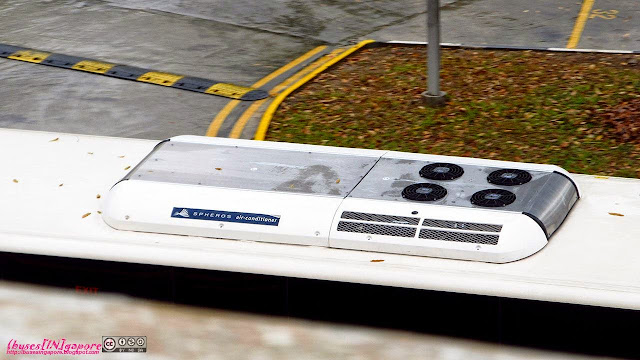 |
| Spheros airconditioning system - top view. |
 |
The MAN Lion's City G - It looks more stocky and shorter than SMB388S - and more solid looking too.
(Photo source : euregiobus.de, used for the purpose of illustrating the MAN Lion's City G bus) |
 |
| Offside of SMB388S on the first day of service on 190 plying between Choa Chu Kang & New Bridge Road. |
Once on board SMB388S, well....the excitement of a new bendy bus wears off very quickly.....>.<
 |
| We've seen this before somewhere.....oh, earlier on in the article, SMB1341C's interior (missing two chairs). Except this is longer. |
The interior of SMB388S is almost the same as the SMB13XX series MAN NL323Fs, what one would be seeing if he/she regularly boards a MAN NL323F A22. The only difference for the front half is that it has 2 pairs of front facing Vogelsitze per side instead of 3 pairs before the wheelchair bay/exit door - due to the shorter length of the front half of the bendy bus. The seat layout is similar to that of the Lion's City G.
The front is also the same too, apart from a few minor differences.
 |
| Same parts. lol |
 |
| The same control box styling as SMB138Y & production batch, housing the electronic signage control, Spheros aircon control and the CCTV screen. |
 |
| The driver cabin view - the only addition to the default NL323F view is an extra TV that provides a view of the rear installed between the dashboard and EZlink reader console. |
 |
| The driver dashboard with an extra button for the second exit door. Part of the TV screen for the rear view camera can be seen too. |
At the wheelarch seats at the front, instead of having a curved handle on the wheelarch seat, it's now a metal handle.
 |
| Metal handle on the wheelarch seat |
As it is not using the Lion's City Hybrid design, the first window after the driver cabin/entrance door has no sticker pasted on the left/right side of the windows.
 |
| Unlike the MAN NL323F A22, there's no sticker thing here as part of the Lion's City Hybrid bodywork design. |
Moving on to the middle, the articulator curtain accordion is translucent, allowing sunlight into the articulator section in the daytime. Hope they do keep it clean if not the translucent articulator would just be showing dirt and stuffs under the sunlight.
 |
| Translucent! |
 |
| Grab poles are installed on both sides of the articulator instead of a pole in the middle of the turntable. |
 |
| Another view of the translucent articulator - the shadow is the connector between the middle piece to the rear carriage. |
And towards the rear half of the bus.
It's the first bendy bus in Singapore to have rear facing seats at the rear half. Since the wheelchair bay & ramp is at the front half of the bus, there is seats opposite the exit door, and a divider pole for in the middle of the exit door. Apart from that, quite similar to the NL323F's rear half.
 |
| Deja vu, minus the wheelchair bay/space and foldable seat. |
 |
| View from the rear to the front - the divider pole can be seen at the exit door |
 |
| SMB388S's rear half seems to be longer than the Mercedes Benz O405G rear half. |
Overerall, the bus is about the same as the MAN NL323F A22, except it's longer and sounds different given it's equipped with a Voith gearbox. Anyone used to the lively ZF gearbox of the NL323Fs will feel odd when taking the NG363F for the first time due to the difference in gear changes when accelerating/cruising. Also, it has a weird handbrake sound or something.....not sure what's it about.
Comfort wise is expected from the NG363F - the NL323F itself is already a very comfortable bus. 'Nuff said, try it yourself! The Spheros aircon system feels cool but at times doesn't seem to cool very well until after a while.
 |
| SMB388S~ |
And given the success of the MAN NL323Fs, it is likely that there'll be production batch of the NG363F A24 but it remains to be seen though. Let's see SMB388S's journey for the next 17 years!
 |
| SMB388S turns out in style as it prepares to depart New Bridge Road Terminal~ |

It's not every day that we get to see a passenger carrying bus being re-purposed for another use that does not involve carrying passengers, such as ex-SBS1992G and ex-SBS468K. They were donated ex-SBS Transit buses that were converted into a mobile library by National Library Board.
 |
| The first Molly, ex SBS468K aka XD2037B which have been retired and presumed scrapped. |
 |
| Ex SBS1992G aka XD5296A is the current Molly bus. It is an ex SBS Transit Volvo B10M MK IV Strider. |
And then we have this - a private plated Dennis Dart with Duple Metsec bodywork (UMW variant) PC442C that was recently converted into a mobile garden bus for educational purposes, and named as "National Geographic Explorer Bus".
 |
| PC442C at North Vista Primary School after the launch. |
The Dennis Dart buses are quite hard to find in Singapore as there have only been a handful of them owned/operated by private bus companies and SBS Transit (which have been retired), bodied by Duple Metsec. The Dart chassis is pretty popular around the world with various configurations and bodyworks, with it later having a SLF (super low floor version) zero step
A few of the private Dennis Darts around in Singapore that was managed to be encountered and photographed so far:
 |
| PA172S, one of the handful of Darts around. This unit is rumoured to be an ex-Trans Island demonstrator, but there's no information about it so...let's leave it as a rumour. It has a different front due to the bus having met with an accident some time ago. Usually based at the heavy vehicle park beside Bishan MRT depot. |
 |
| CB5645K, a Dennis Dart in stock configuration and very similar to PC442C, though this may have been de-registered and scrapped. |
SBS Transit's Dennis Dart fleet, which numbered around 10 and fitted with Duple Metsec bodywork similar in configuration to their earlier Duple Metsec bodied Mercedes Benz O405 and B10M MK III and. They were usually plying service 42 and 92. A more in-depth write up of the SBS Transit Dennis Dart can be found
here.
 |
| One of SBS Transit's Dennis Dart, which have been retired. |
PC442C was originally mistaken by some to be an ex-SMRT Dennis Lance (UMW variant) due to a TV news report which showed the interior of PC442 - mainly due to the grey fabric covered aircon ducts and the hopper windows that is a shared feature of the UMW variant Darts and Lance.
Coincidentally the SMRT Dennis Lance fleet was undergoing early retirement hence it would be easily mistaken that an ex-SMRT Lance had been converted into the garden bus instead.
 |
| The interior of the UMW Lance. |
 |
| And since this post is mainly on a private plate Dennis Dart, here's a private plate Dennis Lance (UMW) to accompany it~ The hopper windows on the windows can be seen here. |
PC442C's history
This particular Dennis Dart was originally registered as PC3300U, in blue with another company. It was later used by Keinzo in orange livery while retaining the dark blue bumpers and registered as PC442C. The bus was first brought into service and registered on 7th Oct 1998, and will have its lifespan expire in another 5 years at the time of this post on 6th Oct 2018.
 |
| This is PC3300U as it laid over at Jurong East Bus Interchange a long time ago. Photo credits : Muhd Zakaria. |
From
SGcarmart where the bus was put on sale after its life at Kenizo and managed by Thinkone Automobile.
The following photos below are used for the purpose of illustrating the bus as it was awaiting its new owner. Photo credits :SGCarMart.com
And it had found a new owner and is now a Mobile Bus Garden/ Explorer bus with National Geographic Singapore in partnership with NParks & Science Centre Singapore.
It was announced on the
Straits Times news website 3 days before its launch by Senior Parliamentary Secretary for Education Sim Ann at North Vista Primary on 25th March 2013.
 |
| PC442C as the Explorer bus |
The base design of the bus remains unchanged - The bus retained its original orange and blue livery, but has a new stickered livery by National Geographic on the vehicle and only showing the blue bumper.
 |
| PC442C's offside |
 |
| The rear nearside of PC442C. Note the power cables at the bottom left of the bus - the interior ventilation system runs on this electricity source while the engine is off. |
What used to be designated as an emergency exit doorway on the bus is now a normal exit door with steps to exit the bus. The steps is stowed on the bus when travelling or not in use.
 |
| Entrance remains as entrance at the front, but the exit is now configured to be here. Previously as the city bus Keinzo Dart, the entrance doubles up as the exit. |
The Dennis Dart's rims up close for those who are curious.
 |
| Front rim |
 |
| Rear rim |
And no, the bus hasn't grown some stylish "hair" at the front and rear; those are flora, grass and plants fixed on the roof~
 |
| From the nearby flats - the offside roof shot of the vehicle with National Geographic staffs busy preparing for the day ahead before the launch in the afternoon. |
 |
| Close-up of the roof attachment - the aircon pod has also been stickered or painted over in yellow, and the roof attachments at the front and rear of the bus can also be seen. On the roof, it shows "National Geographic - Young Explorer" |
Into the bus~
The front interior & driver cab of the bus is mostly retained, the major works are done in the passenger space - and according to the Ms Then from the public relations company, the bus was converted within two and half days~
 |
| The chassis plate and identification for the bodywork. UMW-Dennis ftw. |
 |
| The driver's dashboard/workspace. Though the driver cabin's floor space has some grass floor on it~ |
 |
| The gearbox selector lever in Neutral (N) & handbrake~ |
The passenger space is where the major modifications were done - all of the Vogelsitze system 600 seats have been removed to convert the vehicle, along with most of the grab poles.
 |
| The original interior of PC442C. The following photo is used for the purpose of illustrating the bus as it was awaiting its new owner. Photo credits :SGCarMart.com |
After the conversion to the mobile garden bus. Note that the original grey fabric covered aircon ducting is retained. The interior is lit by two strips of parallel LED lighting for illumination as the bus engine is off and is powered by the external power source when it is on "display mode".
According to the
news report on Straits Times "Only some natural light will be allowed to penetrate through the foliage to mimic a real jungle atmosphere.".
 |
| Tada! The garden~ |
The Vogelsitze seats above the two front wheel arch has been replaced with garden benches~
 |
| The left wheelarch that used to house 3 Vogelsitze seats with a bus stopping bell~ |
 |
| And the right wheel arch that used to house 3 Vogelsitze seats too. |
 |
| Note that the wood fitted at the pillar has a slot for the vehicle identification plate above the right wheel arch that's behind the driver's cabin, above the right wheel arch. Unfortunately, the flash blanked out most of the details. |
According to the
Straits Times news report - The interior features 57 tropical plant species commonly found in Singapore and are split into three sections - the bromeliad and airplant garden, the cactus garden and the fernery garden.
 |
| The right side space with information boards and plants~ On the left are quite a lot of plants/grass which are marked by small signs for each plant species. |
 |
| Further up ahead to the rear half of the bus, with more info boards and plants. There are iPads fitted for interactive learning~ For the taller people visiting the bus - a "Mind your head" sign is fitted, together with a "Mind your Step" at the floor step below. |
 |
| At the rear of the bus, with the original aircon duct intact and the LED lighting visible. The rear seats have been replaced with bench seating with more plants on display, and an iPad for interactive learning~ |
 |
| View from the rear to the front of the bus, with another iPad on the left for interactive learning. |
Since the engine is turned off when the bus is in "display mode", how does this bus ventilate itself? Good question.
There are two portable air-conditioning systems on board the bus (in green to camouflage with the green plants), together with a portable and powerful fan at the rear to keep the air flow moving constantly and not have the bus being very stuffy, powered by the
exterior power cables attached to the left rear of the bus.
 |
| The fan and air con system at the rear of the bus. |
 |
| And the air con system at the front of the bus, with a National Geographic logo beside it and plant name info stuffs. |
And that wraps up the post on this unique bus~
The bus will be roaming to various schools in the coming weeks =)
 |
| As the day ends with the equipment and banners used for the event being removed from the school. |
Special thanks to North Vista Primary School's staff/liaison Mr Michael Au and National Geographic Singapore for allowing entry to the school/vehicle for photography + documenting purposes.

It's not everyday that one will get to have free rides that is not due to an MRT breakdown (free shuttle) or free shuttle services like the IKEA shuttle.
 |
| During the December 2011 MRT disruptions, free shuttle buses were deployed by both SBS Transit and SMRT Buses to do free shuttle duties to temporarily replace train services so that SMRT could check the island wide tracks/third rail. |
 |
| Free IKEA - Tampines Retail Park Shuttle service (note the free ride quotes on the top of the livery), though this vehicle was working on the Boon Lay - Alexandra IKEA shuttle. |
But there was a free ride on a public bus service on 16th and 17th March 2013 - Tokio Marine had their celebrations for the 65th anniversary and here's the extract from their
website and a
press release -
"We would not have come this far if not for the dedication of our past and present staff, the support of our agency consultants and business partners and the trust that our valued clients have placed in us.
This celebration would not have been possible without you!
To kick start this celebration, we invite all to hop on to our very own Tokio Marine Life Insurance Bus 65 for free rides all day this Saturday and Sunday (16 & 17 March)!"
On their website, they feature a ComfortDelgro bodied Volvo B9TL but for service 65, there are no ComfortDelgro bodied B9TLs permanently deployed on the service (as of the writing this post). So SBS9531B - Volvo Olympian 3 axles batch 2 (deployed from Ayer Rajah Bus Park controlled 65 was pasted with the advertisement) did the free rides stint for the whole day.
The banners at Harbour Front Interchange's queuing berth for service 65.
 |
| SBS9531B not in sight >.< |
And the banners at Tampines Interchange's queuing berth.
 |
| SBS9531B at Tampines Bus Interchange waiting for the front bus on 22 occupying the boarding berth to depart. It does look like any other normal buses from far, with no indications it was giving a free ride. |
 |
| Boarding time! |
Took a free journey from Tampines Interchange to Jalan Kolam Ayer. On board, there's 5 pieces of cardboard stuffs covering up the Ezlink readers and coinbox.
As there's no "free rides on 16th & 17th March" promotional signage on the windscreen, many passengers along the journey on boarded presumed it was a normal revenue service bus proceeded to habitually tap the ezlink card after boarding, only to be told by the driver that it's free and resulting in many having a surprised reaction that it's a free ride~
 |
| The most prominent cardboard signs when one boards the bus. And a box covering the coin box. |
Have to salute the Bus Captains for both day, having to tell/explain to the passengers that it's free at probably every stop with boarding passengers for SBS9531B and seeing the surprised & happy looks on the commuters the entire day.
The revenue equipment systems were probably disabled for the day or the signs pasted on the EZlink reader are thick enough to stop any wireless contact with the EZlink card, but the former is more likely to prevent any accidental deduction of fares.
 |
| On its way to Harbour Front on the last few evening trips of the day..... |
 |
| The exit readers are covered up too ~ |
 |
| Goodbye free rides for the last day (17th March 2013). |
SBS9531B has since resumed its revenue collecting service from 18th March 2013 with this new advertisement by Tokio Marine.

The Volvo B10M-70 MK IV Superlong demonstrator was introduced in 1995. The bus is almost identical to its regular MK IV Duple Metsec (DM) 12m cousins and is allocated a registration number right after SBS996C. SBS997A is a 3 axle rigid, 14.5m vehicle equipped with a Volvo THD102KF engine and a ZF 4HP590 gearbox.
 |
| SBS997A on 62, which it was serving before being redeployed to 83 between Punggol - Sengkang (Loop). |
SBS997A was trialled together with the other two high capacity articulated (bendy) buses SBS998Y (a B10M-Articulated with Duple Metsec bodywork) and SBS999U (a Mercedes Benz O405G with Volgren bodywork).
The 3 high capacity buses were trialled by then- Singapore Bus Service (SBS) to test the suitablity of
using high capacity single deck buses on routes inaccessible or unsuitable for double-deckers. Rival operator Trans Island went for the articulated Mercedes Benz O405G bodied by Hispano registered as
TIB838H for the trial..
 |
| SBS998Y - Volvo B10M Articulated with Duple Metsec bodywork. (Photo source - Christopher Lee) |
 |
| SBS999U - Mercedes Benz O405G with Volgren bodywork (Photo source - Christopher Lee) |
While the trial for all 3 units with SBS was not successful and no production vehicles were brought in, Trans Island's articulated (bendy) bus trial was successful and saw the Mercedes Benz O405G being brought in with both Hispano (MKI/II/Habit) and Volgren bodywork. SBS went on to concentrate on double deckers instead.
It was said the 3 units - SBS997A,SBS998Y and SBS999U put up for sale but only SBS998Y and SBS999U was bought by Bayes Coachline in New Zealand.
 |
| Ex-SBS999U - Photo by Zack Harrison from Google Search |
It's just a guess
- SBS997A's supposed problem was the passengers alighting from the rear exit- there was no third exit and passengers from the rear had to squeeze through the long length of crowd to aligh, though it might be the length of the bus at 14.5m and negotiating difficulties. SBS998Y and SBS999U's supposed problem was with the near 18m length taking up space, negotiating difficulties and the depot facilities/ driver training were catered for double deckers - the mainstay high capacity vehicle type for SBS since the 80s.
And so the remaining bus for the high capacity single deck trial SBS997A stayed on and is likely to be retired in October 2012.
 |
| SBS997A turning out on 83 back to Punggol. |
SBS997A (and the B10MA articulated SBS998Y)'s bodywork was derived from the Duple Metsec bodied MK IV 12m, with the difference in the signage area (SBS997A using Mobitec flipdot signage while regular Duple Metsec bodied MK IV uses plastic signage/route plates).
 |
| SBS997A with a 12m DM B10M MK IV. |
This bodywork design was derived from the retired Volvo B10M MK III....
 |
| A Duple Metsec bodied B10M MK III (front) with a MK IV behind |
....which was derived from the retired Volvo B10M MK II (Duple Metsec)
 |
| Volvo B10M MK II (Duple Metsec (Photo source - Rainbowbus) |
Another difference between the MK IV DM and the Superlong is the rear - SBS997A's rear is tapered to prevent it from hitting things when turning. The tapered rear is also present on SBS998Y.
 |
| SBS997A's tapered rear. Due to the length of the bus, a "Long Vehicle" sign was installed beside the license plate, together with a warning bumper sticker. |
 |
| SBS998Y's tapered rear (Photo source - Christopher Lee) |
And a comparison of the tapered rear with the standard rear
 |
| The rear of the MK IV and MK IV Superlong |
The interior for SBS997A is largely similar to the unrefurbished DM Volvo B10M MK IV, save for a few differences.
 |
| Interior of SBS888G, a (now retired) unrefurbished DM bodied MK IV . |
 |
| Interior of SBS997A |
 |
| The front view~ |
The differences include
- Yellow grab poles with ribbings for extra grip for passengers.
- Full length parallel lighting on SBS997A vs Staggered lighting on the DM B10M MK IVs.
- Extra seatings due to the increased length
And also above the right wheelarch, the side facing seats in the DM MK IV are configured as bench front/back facing seas on the Superlong.
 |
| Front/back wheelarch seating instead of side facing seats, may be due to the increase length allowing for legroom for such configuration. |
Misc stuffs:
 |
| A fan-type thing on the ceiling of the bus, and part of the parallel lighting is shown here. |
 |
| Some speaker behind the drive cabin, and the "Licensed to Carry" sticker has modified numbers for the legal carrying capacity of SBS997A. |
 |
| Above the driver's cabin - Licensed to carry sticker and chassis plate. |
 |
| Mobitec signage controller~ |
 |
| Information plates on SBS997A, together with the SBS sticker that says "assembled in BA/HG" (Bus Assembly/Hougang). |
 |
| SBS997A! |
 |
| The left wheelarch housing, where the farecard validator used to stand and also houses the first aid kit. The wiring for the side Mobitec signage can be seen. |
 |
| The rear facing seat beside the Mobitec side signage. |
 |
| The full length parallel lighting turned on. |
SBS997A will be retiring on 13 Oct 2012, provided if no extensions are given. It's pretty much one of the more unique demonstrators of the 90s, being a 3 axle single decker long rigid public for high capacity trials.
 |
| SBS997A arriving Punggol Interchange |
 |
| SBS997A on Off Service |

 |
| YL8508R at Pat's Schoolhouse. |
New in service as SBS7196Z, it was converted near the end of its lifespan to a gym/playground for children known as Bobbie the Gymbus and was re-registered as YL8508R. Apart from the current livery and the interior modifications, it is the last very near intact Leyland Olympian 2 axles with Walter Alexander R bodywork in Singapore while most of its cousins were scrapped.
 |
| The offside of YL8508R as seen from the outside of the compound. |
 |
| The rear of the bus as seen from outside. |
 |
| The full length of the Leyland Olympian 2 axles. |
 |
| The rear of the bus as seen in the compound. |
 |
| Closeup of the Alexander R rear. |
 |
| The emergency exit door, with the older white panel from the (what used to be rear row of seats) still intact) |
 |
| The expired road tax and stuffs. |
 |
| This used to be a square destination plate holder, with the door opening button and the signal indicator. |
Stepping on board the Leyland Olympian 2 axles.
 |
| The front steps were laid with a new flooring which continues into the bus. |
 |
| From the entrance, the driver's cabin can be seen. |
 |
| Driving cab of the Leyland Olympian 2 axles. |
 |
| View of the dashboard,which is covered in a lot of dust. |
 |
| The VIN (Vehicle Identification Number) plate mounted on the left side of the dashboard. |
 |
| The onboard fan for the driver. |
 |
| Leyland logo, fuel indicator and the ignition button (?) |
 |
| The driving gear selector, handbrake and the door opening and closing buttons. |
 |
| Right above the driver, the switches for controlling the fans for internal air circulation. |
 |
| The olden type of periscope for viewing by the bus captain to the upper deck. |
And the entire view of the front windscreen from the former side facing seats in the interior.
 |
| Alexander R front view from interior with the SBS plate retained. |
 |
| Close up of the former registration plate number of the Leyland Olympian 2 axles.. |
 |
| A red notice cautioning the non-SBS driver(s) of the bus that this is a 4.44m high double decker bus. |
 |
| The non-functioning door, with the older type of bigger leaf with smaller leaf door system used on older SBS buses. |
And behind the front left windscreen :
 |
| The old bus stopping bell placement facing outwards. Today's modern buses do not feature this anymore. |
The interior of the bus is reconfigured to be the children's exercise playground, though it retains most of the non-airconditoned features of the Leyland Olympian 2 axles including the fans and lighting.
 |
| The interior of the lower deck. There used to be seats and partioning but were removed. |
 |
| The exit doors were retained, though the steps are probably hidden from view. |
 |
| The view from the rear to the front. |
 |
| The lower deck rear window. With most of the current double deckers (excluding the currently still in service Volvo Olympian 2 axles non-aircon buses), the lower deck rear window will soon walk into history. |
Onwards to the upper deck
 |
| The staircase leading up to the upper deck. |
 |
| The older type of periscope for the driver only sees the portion after the staircase, newer double deckers had the mirror above at the front. |
 |
| The upper deck Alexander R front view from the interior, with the SBS plates retained. |
 |
| The old SBS plate with the current YL registration plate. |
 |
| The upper deck from front to rear. |
 |
| And the view from rear to front. |
 |
| The sticker warning against litering in the (SBS) bus, hidden above the window of the rear deck. |
And before this yellow paint scheme was applied, it was in a bright red livery when brand new.
And this is the mascot for Bobbie the gymbus.
Apart from this Leyland Olympian 2 axles, there is also another decomissioned unit that was converted into an office at the National Youth Council (NYC). The Qbuzz Leyland Olympian 2 axles is the first in the SBS fleet.
Unlike Bobbie, the NYC Qbuzz Olympian is heavily modified on the exterior.
 |
| The offside of the Qbuzz Leyland Olympian 2 axles. |
 |
| The nearside of the Qbuzz Leyland Olympian 2 axles. |
The current fate of Bobbie the gymbus is unknown as of today, according to the Pat's schoolhouse management, it may be heading for the scrapyard or will be refurbished.
My special thanks to the Pat's Schoolhouse (Jubilee)'s management for allowing the documenting of this bus.
 Following up on the previous post on LECIP EDSes upgrade on the older double deckers (CDGE B9TL and Volvo Olympian 3 axles batch 3), I wrote that "And after the installation is complete for the CDGE B9TLs, the next to recieve a
LECIP upgrade might be the Volvo Super Olympian fleet, as the oldest VO3X batch
3 recieved its LECIP upgrade due to it still having a long (service) lifespan with SBS
Transit".
Following up on the previous post on LECIP EDSes upgrade on the older double deckers (CDGE B9TL and Volvo Olympian 3 axles batch 3), I wrote that "And after the installation is complete for the CDGE B9TLs, the next to recieve a
LECIP upgrade might be the Volvo Super Olympian fleet, as the oldest VO3X batch
3 recieved its LECIP upgrade due to it still having a long (service) lifespan with SBS
Transit".
And on the 2nd last day of 2011 (30th Dec 2011), SBS9822L was the first Volvo Super Olympian to have the LECIP EDS upgrade, using the size of signage from the CDGE B9TL. The original red borders are not changed to black as with the VO3X batch 3 upgrades.
 |
| SBS9822L on 65 as it approached Tampines. |
 |
| Unlike previous upgrades which utilised the side destination plate holder box, the electronic signage on SBS9822L is mounted on top (similar to the Wright B9TLs) |
 |
| SBS9839P, with the side destination holder at the bottom of the left window. |
About a week later, the signage was changed to a bigger one, giving it an appearance similar to SBS9810X. (
Yea, the photo below looks edited/photoshopped, most likely due to the existing red border that many are familiar with).
 |
| A big signage similar to the one used on the Wright B9TL batch 3 was fitted in place of the original small signage. The side signage remains unchanged. |
The Volvo Super Olympian's plastic signage holder space seems to be able to accomodate a big electronic signage as part of its design, as seen on the then-SBS9888Y Volvo Super Olympian demonstrator (burnt down in a depot fire) and SBS9810X, hence the bigger LECIP signage is a welcome change from the previous small signages seen on the other 2 models given it is now more visible.
Though adding in the black borders could help in aiding visibility too.
 The Nissan Diesel U31RCN was brought in in 1993 by Trans Island Bus Services (more commonly known as TIBS) from Japan. It would be the last Nissan Diesel U31 series bus which was brought by Trans Island in both original airconditioned (OAC) and the non-airconditioned (NAC) before TIBS went on to purchase mostly European brands (with the exception of Hino HS3KRKA/KRKK with Volgren bodywork).
The previous U31 series, U31F and U31SCN had already been phased out.
 |
| U31F (Photo from the old TIBS website) |
 |
| U31SCN (Photo from the old TIBS website) |
 |
| U31RCN, TIB362M when brand new. Photo from the old TIBS website. |
All 3 variants of the Nissan Diesel U31 were fitted with Fuji Heavy Industries' R15/5E bodywork (with slight variations between the 3 models). The U31RCN is powered by the Nissan PE6H Diesel (emission standard EEC 2403) coupled with a ZF4HP500 automatic gearbox.
Though the U31RCN is the only U31 series model to be fitted with a LAWO flipdot signage. The chassis uses leaf spring suspension, sometimes giving commuters a bouncy ride.
 |
| The good old Nissan Diesel PE6H. |
Words cannot describe the nostalgic feeling that you get when you see this bus on the modern roads of today. The design of the bodywork in Singapore today gives it a very retro look and sometimes look a bit out of place at times with modern Singapore. Not to mention the feeling that you travelled back in time when you board one of the U31RCN with its interior which by today can be considered retro.
The U31RCN buses has also been frequently mistaken as a bus that is older than what its real age is due to the design.
Unlike the front signage which is a large board of flipdots, the side signage only consist of 3 distinct flipdot areas allowing for a maximum of 3 numbers or characters to be displayed.
 |
| The side signage. |
City Shuttle Service (also known as CSS) brought in both the OAC and the NAC versions for plying on their various CSS routes.
 |
| TIB369U seen arriving on 854.at Yishun Int. |
As part of an effort to achieve a 100% fully air conditioned fleet, TIBS's NAC buses underwent conversion to become a converted air conditioned (CAC). For the U31RCN NAC buses they were fitted with the same Fuji airconditioning unit as the OAC cousins, but the sliding windows were bolted shut instead of being replaced with full glass windows, as with many other TIBS converted airconditioned buses such as the Mercedes O405 (Hispano CAC) and the then-unrefurbished Scania L113CRL ELBO buses.
 |
| CSS194M, one of the few converted air conditioned U31RCN which was transferred to SMRT Buses' fleet while retaining the CSS registration number. |
 |
| Both the OAC and the CAC variant parked at Geylang Lor 1. (TIB369U & CSS194M) in late December 2011 |
 |
| The bumper/headlamp cluster |
 |
| Towing load sign at the bumper area. |
 |
| Nissan Diesel's wing mirror with the rust on the bus. |
 |
| A destination signage holder together with its slightly newer counterpart, the flipdot signage behind the glass window. |
Apparently a feature unique only on the CSS Nissan Diesels, there is a fluorescent light tube that illuminates the entrance and exit. According to sources, it was used back in the 90s when the street lighting was not very good.
 |
| Entrance illiumination |
 |
| Exit illumination |
And there is a grab bar outside of the bus just right outside at the exit door to facilitate alighting.
 |
| The grab pole on the outside of the bus. |
Though the interior writeup will mostly feature the converted airconditioned variant, the original airconditioned variant has mostly identical feature sets. The CAC bus featured is CSS194M, which is about to be retired as of this posting, with the revenue service equipments removed.
The unique steps at the front entrance
 |
| The space is allocated so as to allow the folding leafs of the door to move freely. |
 |
| The folding door with the grab pole for boarding. |
 |
| The front door when closed. |
 |
| The badging and chassis/engine number of the bus, with the front door mechanism just below. |
The dashboard of the bus is simple, with all analog dials and indicators.
 |
| The driver dashboard. Retro goodness. |
 |
| To the right of the dashboard, the old style flick switch to activate the opening and closing of the entrance/exit doors. |
 |
The gear selector switch and the lights towards the left of the dashboard
|
 |
| Engine temperature and air pressure to the left of the gearbox selector switch. |
And above the driver cabin
 |
| The various switches to activate power for the EDS, interior lighting, EDS controller and interior fan selector. It reminds one of a very old house which uses similar looking switches. |
 |
| The LAWO signage controller |
 |
| The Fuji airconditioning switch. |
 |
| The first aid kit box behind behind the driver. This bus has been removed from revenue service, hence the first aid kit is not present. There's a slot for putting a lock on it. |
 |
| And not forgetting the green bus stopping bell in front, with the spotlight on the ceiling that illuminates the entrance at night. |
 |
| The entrance door. "No Standing On Steps" |
The U31RCN was one of the first few TIBS bus types to feature a zero-partion interior giving the interior a very spacious and roomy feel, and is said to be one of the lowest entry floorline for step buses.
The original seat covers on the OAC was a grey and blue fabric seat covers, while the NAC/CAC was a brown PVC seat covers before refurbishments. The U31RCN was the last in the TIBS fleet to be using bench seatings; newer buses brought by TIBS featured individual seatings mostly by Vogelsitze.
Also due to the lower floorline, the seats above all the wheel arches are raised slightly higher than usual and there are raised metal foot rests installed for the passengers to put their feet on.
OAC interior
 |
| Original interior of an OAC Nissan Diesel (Photo by Public Transport Hub) |
 |
| Refurbished interior of an OAC |
NAC/CAC interior
 |
| The original NAC/CAC interior before refurbishments (Photo from the old TIBS website) |
 |
| Refurbished interior of a CAC |
On this particular converted airconditioned bus CSS194M, it was possible to open the sliding windows.
 |
| A window opened up. |
Right behind the driver's cabin.
 |
| No smoking, eating and drinking and durians are allowed on the bus. |
 |
| This two are ventilation slots that can be opened and convert an OAC bus to an NAC bus in case of an aircon breakdown to continue service, and allow more fresh air to be blown into a NAC. Today, any aircon breakdowns == declare bus breakdown. |
 |
| Aircon ductings. When it was NAC, this channeled fresh air ino the bus. |
 |
| The Fuji aircon filter. |
 |
| Just above the left wheel arch, the farecard validator and the ticket dispenser. |
 |
| The emergency door cock is right beside the front door at the wheelarch. |
 |
| The wheel arch is very big. |
 |
| On the left front wheelarch, and the metal foot rest for both the back facing and foward facing passengers. |
 |
| The same for the right front wheel arch. |
 |
| The priority seats are smaller than the regular seats, due to the accomodation of the sliding door pocket. |
 |
| The pocket that holds the sliding door. |
 |
| The sliding door, with the exit sign, spotlight and red door closing sign. |
 |
| Both the door and the pocket side by side. |
 |
| The steps and the bin. The photoelectric sensor (safety feature, in blue) was not a feature fitted when the U31RCNs were first brought in, but was an upgrade for enhance passenger safety. |
 |
| A sign for opening the sliding exit door in an emergency found beside the door. |
 |
| The bus stopping light in the middle of the bus. The yelow strip running in the middle of the bus is also a bus stopping bell strip, which is not featured in the newer buses of today. |
 |
| The bus stopping bell and the button together. |
 |
| A ventilation fan near the rear of the bus. There are two of them on the bus. |
 |
| Towards the rear half of the U31RCN |
 |
| More foot rest for the seats above the left rear wheel arch.... |
 |
| and the right rear wheel arch. |
 |
| And all the seat covers are white backing too! |
 |
| The Emergency Exit door. 4 Generations of stickers, The sticker on the door should be the original sticker in traditional Mandarin. |
 |
| Wear and tear, and the tradiational Mandarin character for open under "To Open". |
To sum it up, it's hard to say goodbye to the U31RCNs as the rest of the remaining gets retired from service. There were U31RCNs retired after 17 years, while those that are still in service were given a 2 year extension and refurbished.
 |
| TIB365E on off service reaching Yishun Interchange. |
Currently still one of the most iconic buses around, it is the second last Japanese public bus type in service in Singapore (the other being the Hino HS3KRKA (TIB905Y) demonstrator and its production variant, the Hino HS3KRKKs.
 |
| TIB1255H, the only CSS converted TIB rego CAC U31RCN to be still in service in 2011/2012 before eventual retirement. |
Goodbye to the old and hardy U31RCN (1993-2012). Thank you for your service =)
 The Higer KLQ6129GQH2 Fuel Cell Bus was created to ferry athletes and officials around the Youth Olympics Village which was located at Yunnan Garden Campus in the Nanyang Technological University in August 2010.
According to phsyorg.org : "The hybrid fuel cell-battery bus is a joint research project by Nanyang Technological University (NTU) and China's Tsinghua University (THU) and marks another major step forward in NTU's sustainability research and development."
The bus is zero emission, using a hybrid fuel cell that uses hydrogen and oxygen to transform to electricity, which is stored on in the battery and used to power the bus. It is also low entry, wheelchair accessible bus.
 |
| The Higer Fuel Cell Bus @ Wee Kim Wee School of Communications and Information. |
The bus was constructed and tested in Suzhou.
 |
| On the road, probably under test drive in China. Photo from sgforums user ssvenisu |
 |
| In front of Higer's company building in China. Photo from sgforums user ssvenisu |
 |
| In front of Higer's company building in China. Photo from sgforums user ssvenisu |
 |
| With the Chinese press in Higer's factory. Photo from sgforums user ssvenisu |
 |
| The "engine" of the bus. Photo from sgforums user ssvenisu |
After arrival to Singapore, it was under trial run, and was photographed by
bigbus weblog's blogger.
 |
| Seen here driven around NTU with trade plate and SBS Transit livery minus the logo. Photo by bigbus |
It was registered as RD6066L (RD standing for Research & Development) in July 2010, was launched with the Sunlong hybrids. It adorned its current blue advertisment "Zer0 Emission, Low noise, Emits Clean Water".
 |
| As the Higer departs Boon Lay Interchange. Photo by bigbus. |
It was later deployed to do Youth Olympic Games (YOG) internal shuttle, under the plate YOG3419.
 |
| On driver familiarisation runs and with a full body YOG livery, YOG3418 making its rounds. Photo by bigbus. |
And after the YOG, the bus was parked for a long time in its
holding area in NTU.
 |
| In the holding area within NTU, seen with ezlink card readers and revenue service equipments. |
Which it seems to remain inside until it was moved out to another spot within NTU from 17th Nov 2011 onwards.
 |
| Rough translation: To prevent leafs from clogging up and collecting water, please cover up the roof of the bus as soon as possible. Dated 2011.11.17 by THU. |
On to the actual vehicle itself:
 |
| The front of the bus with citybus styling, though the top of the bus looks out of place with a higher roof. . |
 |
| RD6066L, with its badging model number KLQ6128GQH2. |
 |
| The roof of the Higer Fuel Cell vehicle, containing the airconditioning pod and fuel cell equipment. The advantages of this bus is shown in this advertisment in blue and green, together with the NTU and THU university logo.. |
 |
| The side EDS of the bus in close up. |
 |
| The right side of the bus. The black portion under the driver's window adds a nice touch to the design of the bus. |
 |
| The proud partners : SBS Transit, Land Transport Authority, Higer, and Sinohytec. |
 |
| GreenLite. There is a rear camera mounted on the roof to aid the driver, and a long rear EDS is installed. |
 |
| The rear enigne cover, with the Higer and its mandarin character branding covered by the advertisment livery. |
*The bus interior is photographed from the outside of the bus through the windows.
 |
| The interior of the bus. |
The interior colour scheme (thankfully) does not follow the entirely brown theme of the Scania K230UB, instead more of a lighter colour scheme with purple grab poles and yellow door frames. Revenue equipments had been removed.
The seats are by Vogelsitze, with the seating arrangement following standard layout of SBS Transit's low entry buses (K230UB Euro V). With one right wheelarch seat and 2 pairs of 5 side facing priority seats, one wheelchair bay, and standard two abreast seating for the rear half of the bus.
 |
| The dashboard of the Higer |
 |
| The driver's cabin, featuring a very colourful seat for the bus captain. The wheelarch seat is right behind the driver's cabin. |
 |
| HIGER LCD TV on the front half of the bus, which is said to show the performance, battery level etc. |
 |
| The left side of low floor interior, featuring 5 priority seats. |
 |
| The right side of the bus also feature 5 priority seats. Equipments for the bus is seen stacked here. |
 |
| Equipment is placed at the wheelchair bay. |
 |
| Yellow plug doors |
 |
| Another HIGER LCD TV placed for the rear half of the bus. The airconditioning filter cover is similar to the ones used on the Euro V K230UB. |
 |
| The low entry configuration, rear half of the seats. |
Additional photos courtesy of Frankie Wong, photographed when the bus was on service during the Youth Olympic Games.
 |
| Aircon ductings. Photo by Frankie Wong |
 |
| View from rear to front. Photo by Frankie Wong. |
 |
| Another view. Photo by Frankie Wong. |
 |
| The front cabin area of the bus. Photo by Frankie Wong. |
As of 3rd Nov 2011, the bus is undergoing conversion to be a fully electric vehicle
 |
| The newspaper article on Straits Times, Home Section, B11 |
The future for hybrid and electric buses. Looking forward to it =)
For more information on the Higer Fuel Cell bus, do check out the links below:
http://www.physorg.com/wire-news/36844408/more-partnerships-in-china.html
http://www.cses.eee.ntu.edu.sg/Activities/Pages/Cell%20Bus.aspx
 SBS Transit's Wright Eclipse Gemini 2 bodied Volvo B9TL have two distinct batches, with the only difference being the first batch of 150 buses having ZF EcoLife 6AP 1410B transmission, and registered between SBS7500D - SBS7686B (excluding regos ending with 4). The second batch however differs in it having Voith DIWA 864.5 transmission, though the specifications remain the same as the first batch. They are currently registered in 77XX series.
However, a third batch made a debut on 23rd Nov 2011, which are registered under SBS3XXX series.
 |
| SBS3000G, the first of the 3XXX series Wright B9TL |
Externally, SBS3XXX series Wright B9TLs looks very similar to the first two batches, however they are equipped with LECIP electronic destination signages (EDS) instead of Hanover signages. Though they are equipped with the Voith DIWA transmission used in the batch 2 Wrights.
Internally, it is a different story.
 |
| 100% low floor! |
The lower deck is now configured to be 100% fully low floor, utiliing the B9TL's potential as a full low floor double decker. The previous two batches of Wright B9TLs were configured to be low entry. The upper deck remains the same configuration.
 |
| The first two batch had low entry configuration, with a step leading to the seats pictured here. |
 |
| The low floor configuration zero step configuration. |
In the thid batch, it is largely similar in layout, however two side facing seats from each side row are now configured to be foward facing seats. They are also redesignated as priority seats.
 |
| Both pair of seats (top and bottom) are mounted on the "floor" where the previous two batches , would be the place side facing seat passengers would place their feets on. |
There are also minor specifications differences in this third batch.
 |
| The first aid kit is originally housed in the Hanover EDS housing in the first two batch. |
 |
| But in the third batch, it is moved to the front of the bus. |
While the side and rear EDS housing is now bigger to accomodate the size of the LEICP signages.
 |
| The bigger side EDS housing. |
 |
| The door closing sign is now angled for better visibility. In the previous 2 batches, the sign is placed as is, and facing downwards to the floor, making it hard to see the door closing lights when the door closes. |
The move to configure this batch of Wright B9TL to 100% low floor is an improvement over the previous two batches in terms of accessibility, without needing to climb two steps in order to reach the seats, while some small modifications to the specifications such as the door closing sign and the first aid kit relocated to be more prominent at the front of the bus is a welcome change.
 As SBS Transit modernises its fleet with new buses, one of the older bus models in the fleet also underwent modernisation with an electronic destination signage (EDS) upgrade. This is due to the new fleet of buses using EDS systems, which renders the plastic signage used by SBS Transit obsolete.
 |
| Volvo Olympian 3 axles batch 3 with its LECIP sigange. |
The Volvo Olympian 3 axles recieved the LECIP EDS system, which the size of the system fitted into the current desto board slots, without much modifications.
 |
| SBS7402D with its 98M plastic destination plate. |
 |
| The sight of two light bulbs as off service will also be history. |
The ComfortDelgro Engineering bodied (CDGE) B9TLs initially did not have EDS as standard.
But on August 2011, LECIP installation had started, with the first CDGE B9TL SBS7392Z recieving its LECIP EDS. More were soon installed on other CDGE B9TLs. the systems fitted on the CDGE B9TLs are more camera friendly then the ones on the VO3X batch 3s.
Oddly, the size of the LECIP system installed on the CDGE B9TL was the same as the ones on the VO3X batch 3, as the CDGE B9TL looks to be able to accomodate a bigger EDS such as a Hanover system used by its younger Wright B9TL cousins.
 |
| SBS7392Z : the first CDGE B9TL to recieve a LECIP EDS. |
 |
| The rear EDS is bigger as compared to the ones fitted on the VO3X batch 3s. Note the defunct rear plastic plate slot in the advertisment. |
 |
| Transition in progress : LECIP EDS CDGE B9TL side by side with a plastic signage CDGE B9TL. |
And after the installation is complete for the CDGE B9TLs, the next to recieve a LECIP upgrade might be the Volvo Super Olympian fleet, as the oldest VO3X batch 3 recieved its LECIP upgrade due to it still having a long lifespan with SBS Transit.
 |
| Most of the Volvo Super Olympian fleet are also using plastic destination board. |
 |
| SBS9810X with its factory-fitted Transit Media EDS system. |
The drawback of LECIP signage system? It is too small to be seen clearly from far, with the route number still squeezed to the right hand side (kerbside) with most of the area dominated by the destination and scrolling route details. All of the font size are also quite small, given that everything is cramped into what used to be just a huge route number signage.
Though defintely, upgrading the older buses with EDS is a good move as part of modernisation, and it allows the bus captain to check and change his signage with a controller at the driver compartment without needing to open up the signage compartment to change the route details/numbers.
**On 30th Dec 2011, SBS9822L was the first in the fleet of Volvo Super Olympians to have the LECIP signage upgrade.

 |
| SMB191S, the other bus registered. |
On the handover day on 1st Oct 2011 from MAN to SMRT Buses, 2 buses were brought in, Of the two buses, SMB191S was newly registered the day before the launch.
 |
| The launch poster, featuring the Lion mascot. |
 |
| A paper replica of the MAN NL3232F A22 for the guests. |
With the purchase of 200 MAN A22 buses, it marks an exciting first for Singapore's public transport that MAN public buses will be widely used by a public transport operator. For the launch, both buses sport a full body advertisement promoting the features of the MAN A22.
 |
| SMRT Buses : "Bringing you a new travel experience!" |
Given that the bodywork is based on the Lion's City Hybrid, it's also the basis for the Lion mascot. The Lion's City in the Lion City, Singapore!
 |
| SMB191S exiting Hort Park after the launch. |
 |
| The rear with advertisement. The tail lamps components uses LED, enhancing visibility. |
A first for SMRT Buses, the MAN NL323F A22 are equipped with Alcoa rims with rimguards. Very stylish!
 |
| Alcoa rims! |
The layout of the production MAN A22 buses and SMB138Y is very similar. Therefore we recommend to read SMB138Y's writeup to compliment this article
INTERIOR
 |
| Gemilang-designed components |
The design of the driver cabin is brought over from SMB138Y
 |
| Welcome Aboard SMRT! |
 |
| The similar driving cab. |
The interior layout is identical to SMB138Y. You can see what's behind the bus with the rear window in the production batch. The middle bus stopping bell is retained for visiblity for the rear half of the passenger cabin.
 |
| Interior of SMB189A |
The Mobitec electronic display signage (EDS) signage on the production MAN buses have a new longer side EDS signage, replacing the traditional number only display and allowing for the display of route number & route details on the side.
 |
| The new long Mobitec side EDS |
There is a new EDS formatting that is
justified to the left, allowing for more space to show the places passing by in a longer name rather than abbreviations (varies by route details).
The aircon filter is a flat filter intake on the roof, while aircon outlets are not the adjustable types found on the OC500LE and SMB138Y.
 |
| The Denso aircon filter is flat, and not the design found on SMB138Y, which protrudes (rather uglily) into the passenger cabin. |
 |
| The aircon outlet is non-adjustable. |
Unlike SMB138Y, there is no wifi/LG advertisement TV fitted.
 |
| No mobile advertising/wifi installed. |
 |
| Like the demo, there is an exta foldable seat at the wheelchair bay. |
 |
| The door closing system. |
The exit door system is sliding plug door like SMB138Y, though it looks like a different model of the door system.
 |
| Exterior view. |
 |
| A GIF by SMRT Buses on the door opening and closing. |
A minor difference in the rear half of SMB189A and the rest of the production batch, as SMB189A was a production interior demonstrator.
 |
| SMB189A's rear half has a step leading to the rear row of seats. "BEWARE OF STEPS" |
Feedbacks saw the step removed and the rear gently sloped up to the rear row of seats from SMB190U onwards. Also there is a headrest on innermost right seat in the second last row.
 |
| Gentle slope replaces the step for the other 199 MAN production buses. |
On the morning of 3rd Oct 2011, SMB189A debuted on 963E, and in the evening, it did 963.
 |
| On 963E in the morning towards Harbourfront |
 |
| On 963 at night towards Woodlands Interchange. |
For more information on the new MAN A22, do check out this webpage by SMRT: http://smrt.com.sg/manbus/
 >> Do read here for the bus interior and debut on 963!
The MAN NL323F A22 production batch buses are in Singapore! First spotted by the photographer behind Public Transport Hub, it generated a buzz for its unconventional design as compared to the the public buses operating in Singapore.
 |
| SMB138Y on its first day of revenue service in December 2010 |
Instead of sporting the MCV eVolution bodywork as seen on the demonstrator, the production batch buses sports a Gemilang bodywork based on the MAN Lion's City Hybrid bus. The production batch uses Mobitec electronic destination signage instead of Hanover, Vogelsitze seatings and Alcoa rims.
On the unconventional part as conpared to the other commonly seen bodyworks used on public buses in service in Singapore : The front of the roof features a protrusion "air intake" that slopes back to the middle of the bus.
 |
| SMB189A on a test drive. |
In the actual MAN Lion's City hybrid, the roof housing the hybrid components under an airflow-optimized roofline, has been awarded with the reddot design award 2011. This front air intake will cool the capacitors when the bus is operating.
"The body-coloured curvature ends at the silver-coloured roof-surrounding panel, the characteristic AeroLine, which runs over the entire roof. At the same time, this high-quality panel screens the electric cabling and connections behind it from view.
Moreover, it provides the optimum routing for air and the air-cooling of the electrical components. Its anodised, aluminium-like colour gives the vehicle elegance and haptics.
"
Source from here, here & here.
However, in the MAN NL323F production batch, this roofline serves as a routing for air and channeling air to the airconditioning unit housed behind.
 |
| SMB189A on its way to inspection. |
 |
| SMB189A's rear. |
The bus features a third brake light as standard just like the demonstrator as an added safety measure. SMB189A is registered as of 15th Sept 2011, and more should be registered in the coming months.
Update 1: There are speculations that this bodywork may not be manufacture by Gemilang. We are awaiting for a confirmation on the brand of the bodywork.
Update 2: Bodywork is by Gemilang. News article here : http://www.btimes.com.my/Current_News/BTIMES/articles/25GEMILANG/Article/
Update 4: It's confirmed with SMRT it is a Gemilang bodywork, the Lion's City Hybrid design is licensed by MAN. The Malaysia article's link in update 2 is now taken down.

1st August 2011 marks a round of fleet renewal for the cross border services by SBS Transit and SMRT Buses, as their predecessors gets retired
SBS Transit's 170 and 160
There's older buses before this B57 model, but the B57 is the oldest model i remember. We start from the known retired B57 buses on 170
to 170 having B10M MK IIs
 |
| A retired Volvo B10M MK II. |
to B10M MK IIIs were introduced when 170 became fully air-conditoned service. It was a welcome relief as commuters are spared from breathing in the vehicle exhausts during a jam, and also travel across the two countries in air-conditioned comfort)
 |
| A MK III (SBS787P) carrying an advertisment for Maybank. Cross border buses rarely has advertisments on it. |
With its sister service 160 from Jurong East to Kotaraya II introduced in September 2004, it received the airconditioned MK IIIs.
 |
| SBS739D on 160, at Jurong East bound for Kotaraya II Terminal at Johore Bahru. |
and now, part of 160's fleet has been replaced with B10M MK IV buses with DM3500 bodywork.
 |
| SBS2750G, one of the MK IV DM3500s deployed to 160. |
170 has not yet received its deployment of DM3500s yet.
 |
| A blue-plate 170. |
Currently, the MK IV DM3500s are making up part of the fleet for 160 only, and looks to be a gradual changover; with 160/170's entire fleet expected to be using MK IV DM3500 buses in the coming months.
SMRT Buses.
19 September 2004 saw the introduction of 950 as a competitor/alternative on the cross border services operating between Singapore and Malaysia. The fleet consisted of Hispano O405s since its introduction.
 |
| The route details were updated in July 2011 to scroll with route details instead of static "Kotaraya II/Johore Bahru" & "Woodlands Int/Singapore" |
 |
| TIB968R on 950 |
 |
| The rear of TIB968R, with its Malaysia stickers for entering Malaysia as a revenue service bus. |
It is supplemented by a fleet of OC500LEs.
 |
| SMB98D on 950 |
 |
| The Malaysian permit sticker. |
And the black information sticker has been updated to a newer reflecting the accurate information for the OC500LE.
 |
| The old sticker. |
 |
| The new sticker. |
The rear showing the stickers.
 |
| The rear of the OC500LE with its Malaysia stickers for entering Malaysia as a revenue service bus. |
 |
| The predecessor and successor for O405s for 950, the Hispano O405 in front, and the Volgren O405 at the back. |
This also marks the first time where two models from each of the company is running on their respective service (exception of service 170 as it has not received MK IV DM3500s yet)
All info are as of 3rd August 2011.

The first of the SBS Transit Citaro, SBS6000L debuted on 1st of June 2011 on revenue service 28. The appearance is very similar to the
SMRT Buses' Citaros introduced earlier in 2011 save for the livery and customisations with no major design changes in its exerior.
300 buses are ordered by SBS Transit as announced by Daimler on its
press release.
SBS Transit's Citaro's features set is very similar to the SMRT Buses' production batch Citaro; there are only minor configuration/specification differences between the SBST and SMRT version. Therefore we recommend to further read the production batch Citaro's writeup to compliment this article.
 |
| SBS6000L on 28 is the first SBS Transit Citaro to debut on revenue service. |
The destination signage is by LAWO, the same as SMRT's Citaro specification with its LAWO Benefit system. All SBS Transit Citaros are fitted with Alcoa rims as standard as it is lighter.
The front rims captures attention with its unique design and Mercedes Benz badge in the middle, adding a classy feel to the entire bus.
 |
| The front Alcoa rims have the Mercedes Benz rim caps installed. |
The 300 Citaros are expected to be fitted with Voith DIWA 854.5 gearboxes and to fitted with Konvekta air-conditioning as standard.
 |
| SBS6000L on a familiarisation run before its debut. |
No blue wheelchair logo is found on the bumper that was seen in the press release photo, it is replaced by the removable wheelchair accessible logo on the windscreen.
 |
| The rear of the Citaro |
The placement of the rear signage is customised by SBS Transit to be placed on the top left.
Interior
Going on board the Citaro.
 |
| Stickers pasted by SBS Transit to caution passengers to stand clear of doors |
 |
| Passenger handrails are purple. |
 |
| The fire extinguisher compartment is covered up and flush with the interior. |
 |
| The door movement area stickers is now curved instead of the triangles found on the previous low floor wheelchair accessible buses. |
 |
| The dashboard console. The small Voith lettering can be seen gear selector's N button. |
 |
| The information sticker advising passengers to pay the correct fares is above the bus captain. |
 |
| The signage controller, CCTV screen and additional vents located above the driver. |
 |
| The door system and emergency control. |
The interior of SBS Transit's Citaro is configured with SBS Transit's standard colours of red/yellow seat covers and purple grab poles. The brown colour from the Gemilang bodied K230UBs is not used, instead grey and white is the interior colour.
 |
| The bus stopping sign says "Stopping". |
 |
| Speakers. Though there are no announcements played. |
 |
| The aircon ductings have advertisment panel holders installed. |
 |
| The aircondition filter. |
The entire front half of the bus is designated for priority seats (marked with yellow seats) on the non-step space.
 |
| The interior of SBS Transit's Citaro. |
The left and the right wheelarch seats are designated to be priority seats, have side handrails installed to for the convenience of the passengers.
 |
| The left wheelarch seat. |
 |
| Grab poles behind the left wheelarch seats. |
 |
| The right wheelarch seat. |
 |
| The grabpoles behind the right wheelarch seats. the grey colour thing could be a headrest of sorts for the rear-facing seats. |
 |
| The left rear facing seats, with a grabpole installed. |
 |
| And also at this rear facing seat for one adult and one child only, with another grabpole installed. |
 |
| Left side seats. |
 |
| And the right side seats. |
 |
| The space in the aisle at the front half of the bus is adequate |
 |
| The Passenger-In-Wheelchair (PIW) bay/standee area. |
Two posters pasted on the bus windows at the PIW/standee area showcasing the features of the new Mercedes Benz Citaro bus.
 |
| Two posters describing the features of the new Citaro. |
 |
| The PIW bay as seen from the back. |
 |
| The door closing sign and emergency control. |
|
The door system. There are two additional small grab poles at each side of the exit, below the ezlink card reader. |
 |
| Wheelchair ramp. |
Towards the rear half of the Citaro.
 |
| The rear half of the bus. |
 |
| The left wheelarch seats. |
 |
| The wheelarch seats on the right arch. |
 |
| The seat is higher and will leave the feet dangling in the air. |
 |
| The rear row of seats. |
 |
| Part of the engine components is housed here. |
 |
| Please mind your head sticker. There is also a CCTV camera to provide a view of the rear, complimenting the installed CCTV systems. |
In short, though despite the similarities (given its based on the standardised Citaro design), SBS Transit's Citaros are decidely different from its SMRT cousins. The SBS Transit Citaros are also the "spritual successor" for the retired Mercedes Benz O405 (WA/DM) buses, carrying on the legacy of Mercedes Benz in SBS Transit.
Misc
 |
| Please move to the rear plate, instead of small "Please move to the rear" stickers. |
 |
| The blue touch-sensitive Passenger In Wheelchair button. |
 |
| Bus stopping bell. |
 |
| Wheel chocks comes as standard in the Citaros. |
**As of post date, the delievery of the 300 Citaros are in progress.

 |
| The Volvo Olympian 2 axle convertd to YK6115Z parked at Peck Seah Street. |
T
his bus is the former SBS7297R (Volvo Olympian 2 axles) which was based at Ayer Rajah Bus Park. It was converted to MILK (Mainly I Love Kids) bus and registered as YM6115Z. It is currently with I Love Children organisation, a voluntary welfare organization. The theme for the bus is Parenthood planning.
EXTERIOR
 |
| A Volvo Olympian 2 axle with SBS Transit on revenue service. |
 |
| The bumper was repainted. |
 |
| The right side of the bus. |
The non-airconditioned sliding windows are all replaced with wall blocks and vents and fitted with its own power converter to power the utilities inside the bus. The bus is airconditioned for comfort of the visitors, though it is not the regular bus air conditioner fitted on double deckers.
 |
| The rear of the bus. |
The rear of the bus sees the lower deck's rear window replaced with a grille, presumably for the power converter's heat exchanger.
 |
| The features in the bus is powered by an external generator instead of the bus engine for power source. |
Interior/ Lower Deck
Stepping on board the MILK/I Love Children Bus's lower deck brings a familiar sense of familiarity.
 |
| The empty spaces where the revenue collection equipment used to be. |
 |
| For your safety, please stand clear of doors - the old SBS sticker. |
 |
| A mat to welcome visitors on board. The original door system is also retained. |
 |
| The driver's compartment. |
 |
| The vehicle identification number plate of the bus. |
The lower deck's interior is refurbished to blue, with home-type wooden flooring that replaced the original VO2X's flooring.
 |
| The lower deck's interior. |
 |
| This was where the TransitLink farecard/ticket dispenser machine was located. |
 |
| There is a speaker above the space. |
 |
| The bench seats, validator space, signage box and windows have all been replaced by a table and a wall. |
 |
| The Volvo Olympian's exit door system is retained. There is no difference in the external appearance of the door. |
Though there are locking mechanisms to prevent the door from being opened from the outside.
 |
| Two manual locks ensure the doors stay locked and cannot be opened from the outside. The SBS & SBS Transit stickers are retained on the doors together with the door closing sign and door cock. |
Towards the rear half however, the familiarity of a Volvo Olympian 2 axle's interior is gone.
 |
| An extra ladder installed behind the primary staircase that leads to the upper deck. |
 |
| There used to be bench seats at this area, now replaced by wall. |
 |
| Used to have bench seats too. Note the power outlet on the bottom right. |
 |
| Towards the rear, the wheel arch floor space is reconfigured to be behind the steps and the two blocks on the left and the right. |
Let's head upstairs!
 |
| The foot of the staircase on the lower deck. |
Interior/Upper Deck
 |
| A view of the staircase. The walls are all pasted with information stickers, and the original staircase handrail is also changed. |
 |
| Up the staircase. The fire extinguisher glass was cleaned up. |
Following the footsteps.
 |
| The front windscreen and all of the windows are blocked off by the wall, and the original lighting positions seems to be retained. |
 |
| A single bench seat installed. There used to be two front-facing seats here. |
 |
| Front to rear after the staircase. |
 |
| The ladder as seen on the upper deck to return to the lower deck. |
Even though old buses are retired when reaching the statutory age of 17 years in Singapore, they have a new lease of life if sold off/donated to other organisations, serving a new purpose for the public.
Many thanks to I Love Children for allowing the photography of the ex-SBS Transit Volvo Olympian 2 axle YM6115Z on their event "I Love Children Bus Roving @ Peck Seah Street.
"


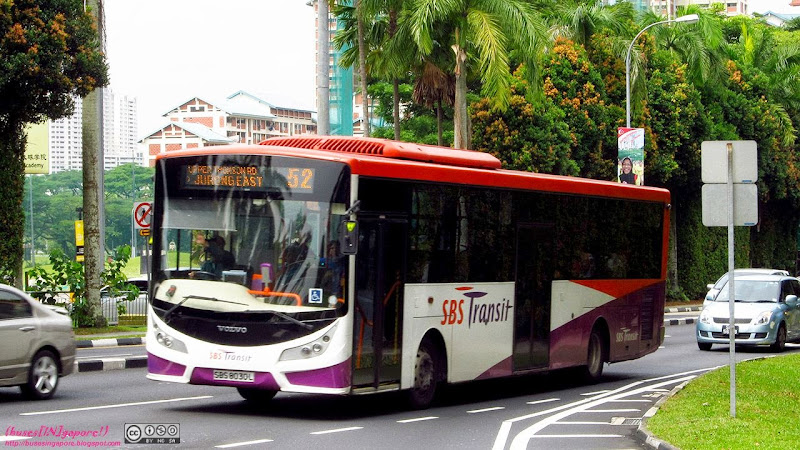
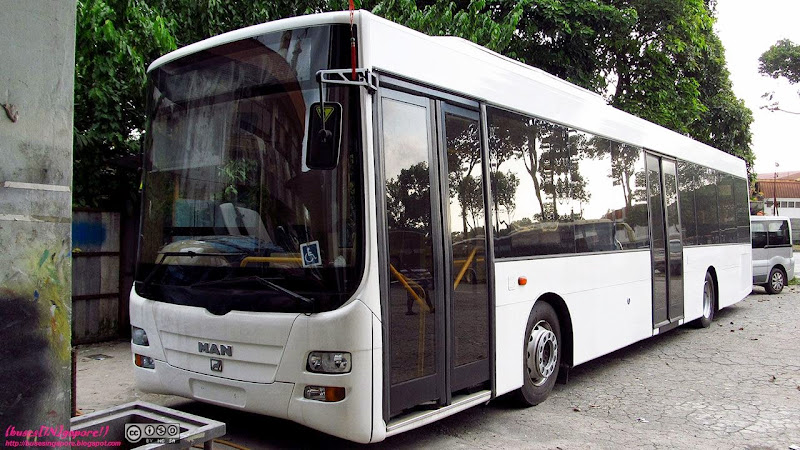


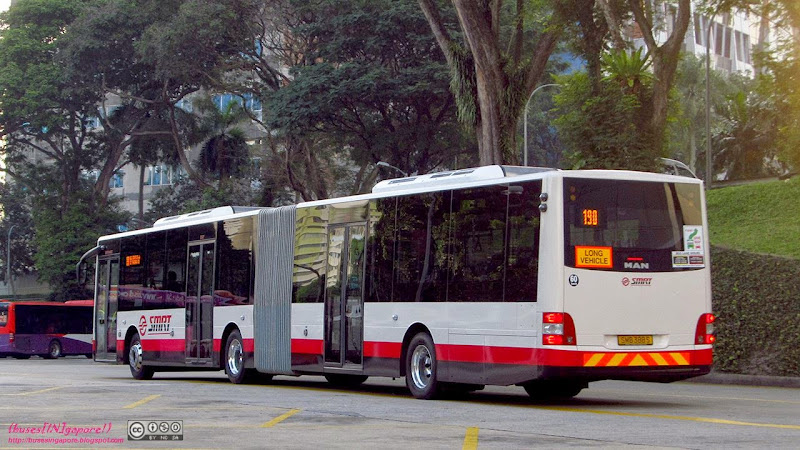


,%26nbsp;%20I%20wrote%20that%26nbsp;%22%3Cem%3EAnd%20after%20the%20installation%20is%20complete%20for%20the%20CDGE%20B9TLs,%20the%20next%20to%20recieve%20a%20%0ALECIP%20upgrade%20might%20be%20the%20Volvo%20Super%20Olympian%20fleet,%20as%20the%20oldest%20VO3X%20batch%20%0A3%20recieved%20its%20LECIP%20upgrade%20due%20to%20it%20still%20having%20a%20long%20(service)%20lifespan%20with%20SBS%20%0ATransit%3C/em%3E%22.%3Cbr%20/%3E%0A%3Cbr%20/%3E%0AAnd%20on%20the%202nd%20last%20day%20of%202011%20(30th%20Dec%202011),%20SBS9822L%20was%20the%20first%20Volvo%20Super%20Olympian%20to%20have%20the%20LECIP%20EDS%20upgrade,%20using%20the%20size%20of%20signage%20from%20the%20CDGE%20B9TL.%20The%20original%20red%20borders%20are%20not%20changed%20to%20black%20as%20with%20the%20VO3X%20batch%203%20upgrades.%3Cbr%20/%3E%0A%3Cbr%20/%3E%0A%3Ctable%20align%3D%22center%22%20cellpadding%3D%220%22%20cellspacing%3D%220%22%3E%3Ctbody%3E%0A%3Ctr%3E%3Ctd%3E%3Ca%20href%3D%22https://blogger.googleusercontent.com/img/b/R29vZ2xl/AVvXsEhopbs8cMSKc9cbYN6qmKg6UDmbgQs148vCRVycJKEWRT-VlOMlYOAul7uPKWhBdwhil_mRlicExJeOMZVTdAXEHPN24GfVjpSdbNiwTcmvvYyUwmwN1QfoNAHvT_Qmx41davy-RsNHhw/s800/IMG_3345.jpg%22%20imageanchor%3D%221%22%3E%3Cimg%20border%3D%220%22%20height%3D%22360%22%20src%3D%22https://blogger.googleusercontent.com/img/b/R29vZ2xl/AVvXsEhopbs8cMSKc9cbYN6qmKg6UDmbgQs148vCRVycJKEWRT-VlOMlYOAul7uPKWhBdwhil_mRlicExJeOMZVTdAXEHPN24GfVjpSdbNiwTcmvvYyUwmwN1QfoNAHvT_Qmx41davy-RsNHhw/s640/IMG_3345.jpg%22%20width%3D%22640%22%20/%3E%3C/a%3E%3C/td%3E%3C/tr%3E%0A%3Ctr%3E%3Ctd%3ESBS9822L%20on%2065%20as%20it%20approached%20Tampines.%3C/td%3E%3C/tr%3E%0A%3C/tbody%3E%3C/table%3E%0A%3Cbr%20/%3E%0A%3Ctable%20align%3D%22center%22%20cellpadding%3D%220%22%20cellspacing%3D%220%22%3E%3Ctbody%3E%0A%3Ctr%3E%3Ctd%3E%3Ca%20href%3D%22https://blogger.googleusercontent.com/img/b/R29vZ2xl/AVvXsEimhDfm0HA20arlcGo1NZ1tjgvFGOUN4DFY88Z77rdbLL9BqlIvzS0bGLJ2V9zs7B3WtZYChVPqmSFIzHVqBN3UxlFsLsFMrGgsxQ703phBckek7XREfahPHOTB30EpyBySr6KW_IQY2Q/s800/IMG_3346.jpg%22%20imageanchor%3D%221%22%3E%3Cimg%20border%3D%220%22%20height%3D%22360%22%20src%3D%22https://blogger.googleusercontent.com/img/b/R29vZ2xl/AVvXsEimhDfm0HA20arlcGo1NZ1tjgvFGOUN4DFY88Z77rdbLL9BqlIvzS0bGLJ2V9zs7B3WtZYChVPqmSFIzHVqBN3UxlFsLsFMrGgsxQ703phBckek7XREfahPHOTB30EpyBySr6KW_IQY2Q/s640/IMG_3346.jpg%22%20width%3D%22640%22%20/%3E%3C/a%3E%3C/td%3E%3C/tr%3E%0A%3Ctr%3E%3Ctd%3EUnlike%20previous%20upgrades%20which%20utilised%20the%20side%20destination%20plate%20holder%20box,%20the%26nbsp;electronic%20signage%26nbsp;on%20SBS9822L%20is%20mounted%20on%20top%20(similar%20to%20the%20Wright%20B9TLs)%3C/td%3E%3C/tr%3E%0A%3C/tbody%3E%3C/table%3E%0A%3Ctable%20align%3D%22center%22%20cellpadding%3D%220%22%20cellspacing%3D%220%22%3E%3Ctbody%3E%0A%3Ctr%3E%3Ctd%3E%3Ca%20href%3D%22https://blogger.googleusercontent.com/img/b/R29vZ2xl/AVvXsEjWnYWlDJ8PmHFmjyXT5XO82YG-YdeNmHfseh-lVJz5uudzIFenE0tBaXFu1A94PoZXIsmr3GFT_d3fAKKAUlGs4JLIAmmluSuG4CLiz0TYgx-6pLsvITs8D3gnIg-y26pCnLa6i01hnQ/s800/IMG_0754.jpg%22%20imageanchor%3D%221%22%3E%3Cimg%20border%3D%220%22%20height%3D%22360%22%20src%3D%22https://blogger.googleusercontent.com/img/b/R29vZ2xl/AVvXsEjWnYWlDJ8PmHFmjyXT5XO82YG-YdeNmHfseh-lVJz5uudzIFenE0tBaXFu1A94PoZXIsmr3GFT_d3fAKKAUlGs4JLIAmmluSuG4CLiz0TYgx-6pLsvITs8D3gnIg-y26pCnLa6i01hnQ/s640/IMG_0754.jpg%22%20width%3D%22640%22%20/%3E%3C/a%3E%3C/td%3E%3C/tr%3E%0A%3Ctr%3E%3Ctd%3ESBS9839P,%20with%20the%20side%20destination%20holder%20at%20the%20bottom%20of%20the%20left%20window.%3C/td%3E%3C/tr%3E%0A%3C/tbody%3E%3C/table%3E%0AAbout%20a%20week%20later,%20the%20signage%20was%20changed%20to%20a%20bigger%20one,%20giving%20it%20an%20appearance%20similar%20to%20SBS9810X.%20(%3Cem%3EYea,%20the%20photo%20below%20looks%20edited/photoshopped,%20most%20likely%20due%20to%20the%20existing%26nbsp;red%20border%20that%20many%20are%20familiar%20with%3C/em%3E).%3Cbr%20/%3E%0A%3Cbr%20/%3E%0A%3Ctable%20align%3D%22center%22%20cellpadding%3D%220%22%20cellspacing%3D%220%22%3E%3Ctbody%3E%0A%3Ctr%3E%3Ctd%3E%3Ca%20href%3D%22https://blogger.googleusercontent.com/img/b/R29vZ2xl/AVvXsEjqsJtFBuO0UZJqPNngGv7m23ItuYz49pp2XCGSGqvNVR4efFes3y0gNEyTCdAbHGsEW9uJLtNFBUdbewfCrNS2pfZ4cDXHR0Jyqm7472D35wVyB3r75AXA5Bu5UWucTuqIHVQJ6mkA1w/s800/IMG_3538.jpg%22%20imageanchor%3D%221%22%3E%3Cimg%20border%3D%220%22%20height%3D%22360%22%20src%3D%22https://blogger.googleusercontent.com/img/b/R29vZ2xl/AVvXsEjqsJtFBuO0UZJqPNngGv7m23ItuYz49pp2XCGSGqvNVR4efFes3y0gNEyTCdAbHGsEW9uJLtNFBUdbewfCrNS2pfZ4cDXHR0Jyqm7472D35wVyB3r75AXA5Bu5UWucTuqIHVQJ6mkA1w/s640/IMG_3538.jpg%22%20width%3D%22640%22%20/%3E%3C/a%3E%3C/td%3E%3C/tr%3E%0A%3Ctr%3E%3Ctd%3EA%20big%20signage%20similar%20to%20the%20one%20used%20on%20the%20Wright%20B9TL%20batch%203%26nbsp;was%20fitted%20in%20place%20of%20the%20original%20small%20signage.%20The%20side%20signage%20remains%20unchanged.%3C/td%3E%3C/tr%3E%0A%3C/tbody%3E%3C/table%3E%0A%3Cbr%20/%3E%0AThe%20Volvo%20Super%20Olympian's%20plastic%20signage%20holder%20space%20seems%20to%20be%20able%20to%20accomodate%20a%20big%20electronic%20signage%20as%20part%20of%20its%20design,%20as%20seen%20on%20the%20then-SBS9888Y%20Volvo%20Super%20Olympian%20demonstrator%26nbsp;(burnt%20down%20in%20a%20depot%26nbsp;fire)%26nbsp;and%20SBS9810X,%20hence%20the%20bigger%20LECIP%20signage%20is%20a%20welcome%20change%20from%20the%20previous%20small%20signages%20seen%20on%20the%20other%202%20models%20given%20it%20is%20now%20more%20visible.%20%3Cbr%20/%3E%0A%3Cbr%20/%3E%0AThough%20adding%20in%20the%20black%20borders%20could%20help%20in%20aiding%20visibility%20too.)




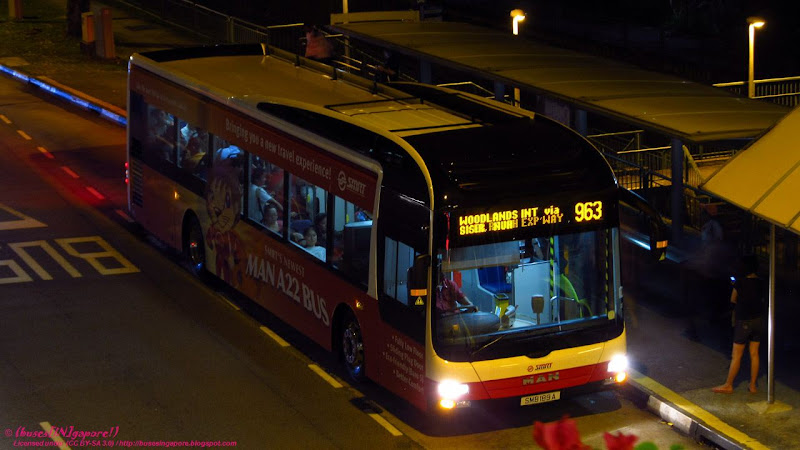


 Following 160 and 950's fleet change from their respective predecessor buses, 170 and its shortworking cousin 170X recieved its fleet change on 29th August 2011.


 MAN A22/MCV eVolution

%3C/td%3E%3C/tr%3E%0A%3C/tbody%3E%3C/table%3E%3C/u%3E%3C/strong%3EGiven%20the%20trial%20of%20the%20hybrid%20Zhongtong%20(which%20uses%20diesel%20and%20electricity%20to%20run)%20has%20ended,%20a%20greener%20alternative%20of%20electricity-only%2010%20BYD%26nbsp;e-buses%20will%20be%20brought%20in%20by%20SMRT%20Buses.%20The%20model%20is%20not%20stated%20in%20the%20press%20release,%20however%20it%26nbsp;is%20speculated%20that%20the%20K9%20bus%20will%20be%20brought%20in.%3Cbr%20/%3E%0A%3Cbr%20/%3E%0A%3Cdiv%3E%3C/div%3E%3Cbr%20/%3E%0A%3Cbr%20/%3E%0A%3Ca%20href%3D%22http://www.chinabuses.org/news/2011/0607/article_4365.html%22%3E%3Cstrong%3Ehttp://www.chinabuses.org/news/2011/0607/article_4365.html%3C/strong%3E%3C/a%3E%3Cbr%20/%3E%0A%3Ctable%20border%3D%220%22%20cellpadding%3D%220%22%20cellspacing%3D%220%22%3E%3Ctbody%3E%0A%3Ctr%3E%3Ctd%20height%3D%2225%22%20width%3D%2220%25%22%3E%3C/td%3E%3Ctd%20height%3D%2225%22%20width%3D%2280%25%22%3E%3C/td%3E%3C/tr%3E%0A%3C/tbody%3E%20%3C/table%3E)
 The old livery of the buses that are operating in Sentosa will soon be updated with a fresh new livery! It now features Sentosa as "Asia's Favourite Playground"


%3C/td%3E%3C/tr%3E%0A%3C/tbody%3E%3C/table%3E%3Ctable%20align%3D%22center%22%20cellpadding%3D%220%22%20cellspacing%3D%220%22%3E%3Ctbody%3E%0A%3Ctr%3E%3Ctd%3E%3Ca%20href%3D%22https://blogger.googleusercontent.com/img/b/R29vZ2xl/AVvXsEhK3iEXSuWPsdMY5d4t8PoYsszp6xZLZn4Iwyt62p57UzpckDDUTEm4Pac79vw-KZXqFqV6eIiYPBcQ8X8uoCqGTiAefun-WBdft5POP_7kNXslZ2vr8VJErD3RGqDA_U_bQGFxYI9gLw/s800/IMG_8916.jpg%22%20imageanchor%3D%221%22%3E%3Cimg%20border%3D%220%22%20height%3D%22480%22%20src%3D%22https://blogger.googleusercontent.com/img/b/R29vZ2xl/AVvXsEhK3iEXSuWPsdMY5d4t8PoYsszp6xZLZn4Iwyt62p57UzpckDDUTEm4Pac79vw-KZXqFqV6eIiYPBcQ8X8uoCqGTiAefun-WBdft5POP_7kNXslZ2vr8VJErD3RGqDA_U_bQGFxYI9gLw/s640/IMG_8916.jpg%22%20width%3D%22640%22%20/%3E%3C/a%3E%3C/td%3E%3C/tr%3E%0A%3Ctr%3E%3Ctd%3ESBS%20Transit's%20incoming%20300%20Citaros%3C/td%3E%3C/tr%3E%0A%3C/tbody%3E%3C/table%3E%3Cdiv%3EWith%20the%20Citaros%20being%20introduced%20in%20Singapore,%20a%20new%202011%20Citaro%20has%20emerged%20as%20its%20successor.%20It%20features%20new%20styling%20and%20bolder%20lines%20on%20the%20side%20of%20the%20Citaros,%20making%20the%20new%20Citaro%20eye%20catching.%3C/div%3E%3Cdiv%3E%3Cbr%20/%3E%0A%3C/div%3E%3Ctable%20align%3D%22center%22%20cellpadding%3D%220%22%20cellspacing%3D%220%22%3E%3Ctbody%3E%0A%3Ctr%3E%3Ctd%3E%3Ca%20href%3D%22https://blogger.googleusercontent.com/img/b/R29vZ2xl/AVvXsEiJrlA2XeKDu14ffKtAXXe0aDQWvn0JmMyHmPM7R6RAtY8eKpFcBIHoZMuNZWzPUeXrZJbJX9blBgKM-OGeYi388h39LDPZ5ORpKD4sGuQEvFb3KDRg6Px7LgdWeS510bjK0_De9TkIcA/s800/wallpaper_06_1920x1200_04-2011.jpg%22%20imageanchor%3D%221%22%3E%3Cimg%20border%3D%220%22%20height%3D%22400%22%20src%3D%22https://blogger.googleusercontent.com/img/b/R29vZ2xl/AVvXsEiJrlA2XeKDu14ffKtAXXe0aDQWvn0JmMyHmPM7R6RAtY8eKpFcBIHoZMuNZWzPUeXrZJbJX9blBgKM-OGeYi388h39LDPZ5ORpKD4sGuQEvFb3KDRg6Px7LgdWeS510bjK0_De9TkIcA/s640/wallpaper_06_1920x1200_04-2011.jpg%22%20width%3D%22640%22%20/%3E%3C/a%3E%3C/td%3E%3C/tr%3E%0A%3Ctr%3E%3Ctd%3EThe%20new%20Mercedes%20Benz%20Citaro.%20Wallpaper%20photo%20courtesy%20of%20%3Ca%20href%3D%22http://www.mercedes-benz.de/content/germany/mpc/mpc_germany_website/de/home_mpc/bus/home/new_buses/models/regular_service_busses/_Citaro_c2/facts/quality.html%22%3EMercedes%20Benz%3C/a%3E.%3C/td%3E%3C/tr%3E%0A%3C/tbody%3E%3C/table%3E%3Cdiv%3E2%26nbsp;promotional%20video%20for%20the%20new%20Mercedes%20Benz%20Citaro%20on%20Youtube%3C/div%3E%3Cdiv%3E%3Cbr%20/%3E%0A%3C/div%3E%3Cdiv%3E%3C/div%3E%3Cbr%20/%3E%0A%3Cdiv%3E%3C/div%3E%3Cbr%20/%3E%0AIn%20short,%20it's%20very%20impressive!)