Top 11 Ideas - What to Post on Your Facebook Page 30 Aug 2016 10:47 AM (9 years ago)
 If you have a Facebook Page, it is important to know what is helpful to grow your audience. You want your followers to increase their engagement with your Page by Liking, Commenting and Sharing your posts with their followers. Your goal in posting a post is to have you and your business be "seen," you want exposure.
People are scanners when reading on the web, and definitely when reading the News Feed on Facebook. You need to give them a compelling reason to stop and take a look at what you have posted. In general, posts with a photo or video are viewed much more than text alone posts. The following list is my...
Top 11 Ideas - What to Post on Your Facebook Page
1. Photos
 |
| Home. Eureka, CA. |
Ideas of photos to share:
- your artwork
- your work in progress
- your studio/office space
- you and/or your employees at work
- new equipment you may have purchased that you are excited about
- where you live
- places you've traveled to
- things that inspire you
- your garden
- your pet companions
- your family
- other interests or hobbies
- other artist's work that inspires you
2. Videos
Photos and videos are viewed, commented on, and shared, much more than plain text postings. Informational, educational, tutorials, and videos showing your creative process are all interesting to your followers.
3. Humor

Humor is one of the best ways to connect to an audience. If possible, it is best to share humor related to your business or industry. This is a great way to show a lighter side of yourself and your business.
4. Current News Events in Your Field
Try to keep it positive. You want your followers to have a good "feeling" from your share, and maybe even inspire them to share it on their page with their followers.
5. Listings
This is your chance to show and tell. Let your customers know when you have a new creation ready to buy.
6. Blog Posts
Announce when you have a new post to share, with a link.
7. Customer Feedback and Testimonials
This is very important as a business. Testimonials from previous happy buyers give proof to potential new buyers that shopping with you was a good experience. Testimonials can be used to validate the value of your product, as well as your customer service level.
8. Expert Advice from Someone Else in Your Field
It is always good to share advice you may have, or you may have come upon, that would be helpful for your followers. This makes following you a more valuable experience.
9. An Inspiring Quote from Another in Your Field
10. Contests and Giveaways
11. Your Store Discounts and Sales
Customers quite often follow you for the value you can provide to them.
I hope this list is helpful for you in you ongoing Facebook marketing.
**If you do find it helpful and think it would help others you know, please Share.


Why are Some Gems Cut as Cabochons? 30 Aug 2016 9:47 AM (9 years ago)

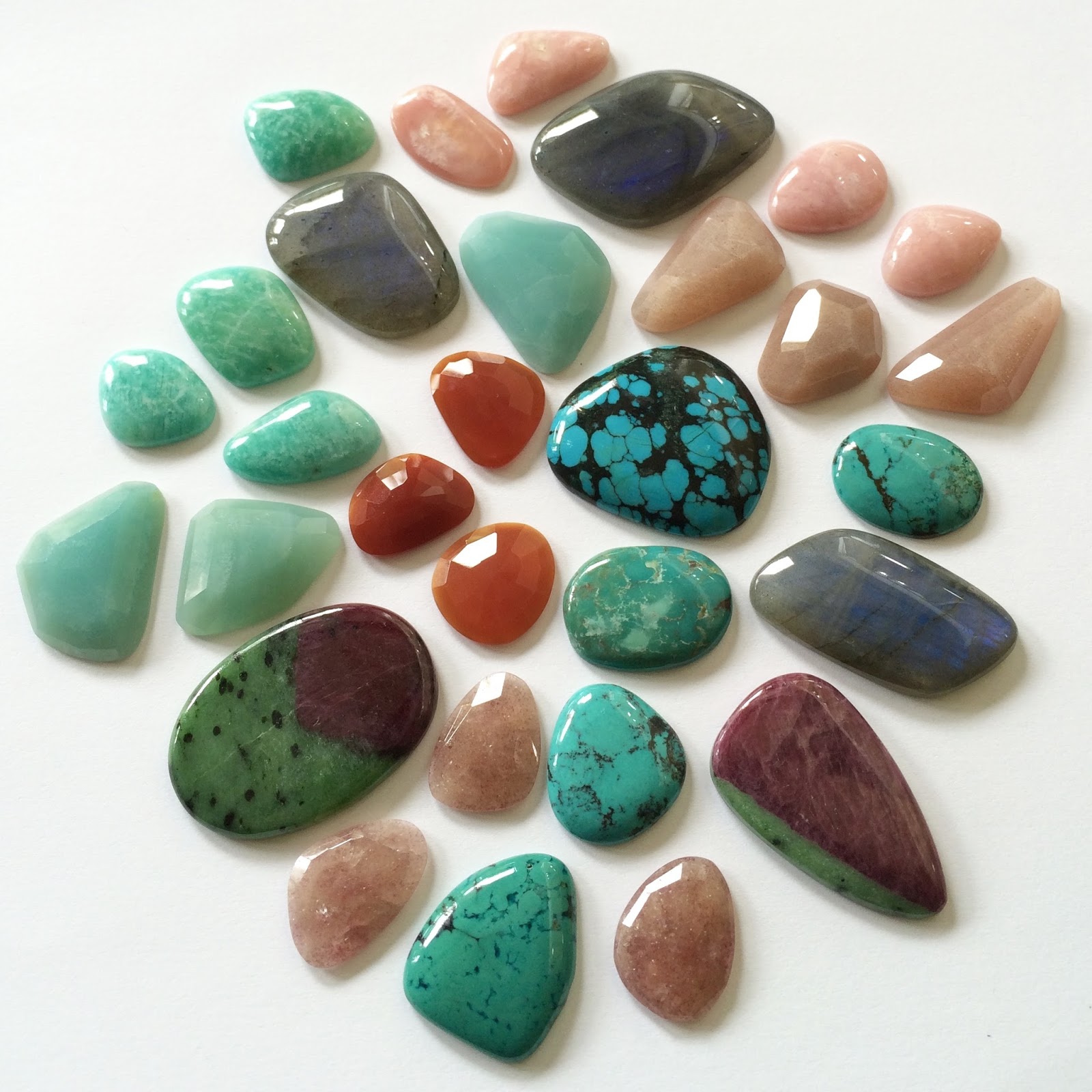 |
| Mixed Gemstone Cabochon Assortment |
Technically, cabochons are not really "cut." Rather they are shaped and then polished. Before the art of faceting was developed, all gemstones were produced as rounded smooth topped cabochons, though some were intricately carved as well. It was a much simpler task to produce a cabochon, than it was to cut a faceted gem with many faces.
Faceted gemstones made their appearance in European jewelry during the late 13th and early 14th centuries. Once the technology and skill was available to facet gemstones, why were cabochons still produced? Different gems are cut as cabs for different reasons. In many cases it is because the gem has special properties that are displayed only when it is cut as a cabochon. Examples are gems that display the star effect (asterism) or the cat's eye effect (chatoyancy) or iridescence (e.g., opal) or adularescence (e.g., moonstone).
 |
| Azurite Malachite, Smooth Round Cabs |
(Information shared from GemSelect.com)
%20or%20the%20cat's%20eye%20effect%20(chatoyancy)%26nbsp;%20or%20iridescence%20(e.g.,%20opal)%20or%20adularescence%20(e.g.,%20moonstone).%3Cbr%20/%3E%3Cbr%20/%3E%3Cdiv%3E%3Cbr%20/%3E%3C/div%3E%3Cdiv%3E%3C/div%3E%3Cdiv%3E%3C/div%3E%3Cdiv%3E%3C/div%3E%3Cdiv%3E%3C/div%3E%3Ctable%20cellpadding%3D%220%22%20cellspacing%3D%220%22%3E%3Ctbody%3E%3Ctr%3E%3Ctd%3E%3Ca%20href%3D%22https://1.bp.blogspot.com/-AzLnl5WHygU/V8XFHLZwUDI/AAAAAAAAGok/H3_xYdDoZh04FtuNSvgeSNsW36DtBsGqQCEw/s1600/IMG_5099.jpg%22%20imageanchor%3D%221%22%3E%3Cimg%20border%3D%220%22%20height%3D%22200%22%20src%3D%22https://1.bp.blogspot.com/-AzLnl5WHygU/V8XFHLZwUDI/AAAAAAAAGok/H3_xYdDoZh04FtuNSvgeSNsW36DtBsGqQCEw/s200/IMG_5099.jpg%22%20width%3D%22200%22%20/%3E%3C/a%3E%3C/td%3E%3C/tr%3E%3Ctr%3E%3Ctd%3EAzurite%20Malachite,%20Smooth%20Round%20Cabs%3C/td%3E%3C/tr%3E%3C/tbody%3E%3C/table%3EMost%20gems%20that%20are%20opaque%20rather%20than%20transparent%20are%20cut%20as%20cabochons%20rather%20than%20faceted.%20You%20will%20also%20see%20lower%20grade%20material%20in%20gemstones%20such%20as%20sapphire,%20ruby%20and%20garnet%20cut%20as%20cabs.%20If%20the%20gem%20material%20has%20very%20good%20color%20but%20is%20not%20sufficiently%20transparent%20or%20clean%20to%20be%20faceted,%20it%20can%20still%20be%20shaped%20and%20polished%20to%20be%20a%20very%20attractive%20cabochon.%20It%20is%20also%20common%20to%20cut%20softer%20stones%20as%20cabs.%20%26nbsp;%20Minute%20scratches%20show%20much%20less%20on%20a%20cabochon%20than%20on%20a%20faceted%20stone.%3Cbr%20/%3E%3Cbr%20/%3E(Information%20shared%20from%20GemSelect.com))
Helpful Tips for Your Etsy Business - Etsy Search 30 Jun 2016 11:53 AM (9 years ago)


Have your sales seemed to have slowed down this year? Maybe even the views to your shop? I know mine have. So I decided to look into why this might be happening.
Etsy is flooded with sellers right now: new and long time ones, retail and wholesale, handmade and not handmade. Things have really changed since I started on Etsy almost 10 years ago. And competition is stiff. And so, once again, Etsy has changed it search algorithm, I believe it was earlier this year. I came across this post, I believe in the Etsy forums, and thought it was good advice to help your listings be seen, and possibly move your listings to Etsy's first page of a search for products similar to your own.
I have been implementing these changes myself, and I have to honestly tell you, I am seeing good results. In the first 3 pages of search on Etsy, using my strongest keywords, my listings show up once. But by page 4 in search, I have many listings showing up in search. So I am seeing results.
This post was written by someone named Sharna R., I believe in the Etsy forums, on Mary 17, 2016. (I have edited and added clarifying information where I felt it may be helpful.)
"I have found great success (in a matter of just a few minutes) in updating 4 things:
1. Title - Put your top hit search terms as the first 3 words in your title. Go to your Etsy stats page, and see what the top three search terms are for your business. Use them in your titles.
2. Materials - Etsy uses this information when customers search for specific things. In my leather pacifier clips rather than just having "leather' in my materials, I added "metal pacifier clip" since my top search hit is "leather pacifier clip."
3. Tags - This is HUGE! Use phrases for your tags rather than just individual words. You will find a lot more success if you are selling earrings to use the tag "geometric stud earrings" rather than "geometric", "stud", "earrings" separately.
4. Description - Similar to Google, Etsy seems to have it's algorithm look for "interesting pages" so adding bullet point lists, links or quotes show Etsy that there's a variety of information on your listing rather than just a brief description of what the item is.
My best advice is to search for your listings as if you were a customer to see where they come up (which page you're on) and try a few things to improve your listings to get on the first page of your top hits search terms. Also, learning from those listings that are on the first page has been very valuable to me as well. Even copying the tags and titles they use has given me good success."
Hope you find this information helpful for your business.
%26nbsp;%20%3C/i%3E%3Cbr%20/%3E%3Cbr%20/%3E%22I%20have%20found%20great%20success%20(in%20a%20matter%20of%20just%20a%20few%20minutes)%20in%20updating%204%20things:%3Cbr%20/%3E%3Cbr%20/%3E%3Cb%3E1.%26nbsp;%20Title%20-%3C/b%3E%20Put%20your%20top%20hit%20search%20terms%20as%20the%20first%203%20words%20in%20your%20title.%20Go%20to%20your%20Etsy%20stats%20page,%20and%20see%20what%20the%20top%20three%20search%20terms%20are%20for%20your%20business.%26nbsp;%20Use%20them%20in%20your%20titles.%3Cbr%20/%3E%3Cbr%20/%3E%3Cb%3E2.%26nbsp;%20Materials%20-%3C/b%3E%20Etsy%20uses%20this%20information%20when%20customers%20search%20for%20specific%20things.%26nbsp;%20In%20my%20leather%20pacifier%20clips%20rather%20than%20just%20having%20%22leather'%20in%20my%20materials,%20I%20added%20%22metal%20pacifier%20clip%22%20since%20my%20top%20search%20hit%20is%20%22leather%20pacifier%20clip.%22%26nbsp;%20%3Cbr%20/%3E%3Cbr%20/%3E%3Cb%3E3.%26nbsp;%20Tags%20-%3C/b%3E%20This%20is%20HUGE!%26nbsp;%20Use%20phrases%20for%20your%20tags%20rather%20than%20just%20individual%20words.%26nbsp;%20You%20will%20find%20a%20lot%20more%20success%20if%20you%20are%20selling%20earrings%20to%20use%20the%20tag%20%22geometric%20stud%20earrings%22%20rather%20than%20%22geometric%22,%20%22stud%22,%20%22earrings%22%20separately.%3Cbr%20/%3E%3Cbr%20/%3E%3Cb%3E4.%26nbsp;%20Description%20-%3C/b%3E%20Similar%20to%20Google,%20Etsy%20seems%20to%20have%20it's%20algorithm%20look%20for%20%22interesting%20pages%22%20so%20adding%20bullet%20point%20lists,%20links%20or%20quotes%20show%20Etsy%20that%20there's%20a%20variety%20of%20information%20on%20your%20listing%20rather%20than%20just%20a%20brief%20description%20of%20what%20the%20item%20is.%26nbsp;%20%3Cbr%20/%3E%3Cbr%20/%3EMy%20best%20advice%20is%20to%20%3Cb%3E%3Ci%3Esearch%20for%20your%20listings%20as%20if%20you%20were%20a%20customer%3C/i%3E%3C/b%3E%20to%20see%20where%20they%20come%20up%20(which%20page%20you're%20on)%20and%20try%20a%20few%20things%20to%20improve%20your%20listings%20to%20get%20on%20the%20first%20page%20of%20your%20top%20hits%20search%20terms.%26nbsp;%20Also,%20learning%20from%20those%20listings%20that%20are%20on%20the%20first%20page%20has%20been%20very%20valuable%20to%20me%20as%20well.%26nbsp;%20Even%20copying%20the%20tags%20and%20titles%20they%20use%20has%20given%20me%20good%20success.%22%3Cbr%20/%3E%3Cbr%20/%3EHope%20you%20find%20this%20information%20helpful%20for%20your%20business.%26nbsp;)
Colored Gemstone Choices for Fall 2016 Fashions 23 Jun 2016 11:54 AM (9 years ago)


Airy Blue - Aquamarine, Sky Blue Topaz, Swiss Blue Topaz, Natural Chalcedony and Turquoise.
Sharkskin - Gray Moonstone.
Aurora Red - Carnelian, Red Coral.
Warm Taupe - Smokey Quartz.
Dusty Cedar - Rhodonite and Rhodocrosite.
Lush Meadow - Emerald, Green Onyx and Green Adventurine.
Mustard - Citrine and Yellow Tiger Eye.
Potter's Clay - Carnelian, Red Onyx and Jasper.
Bodacious - Phosposdarite, Charoite, Amethyst and Pink Amethyst.

Color Trends for Fall and Winter 2016 23 Jun 2016 11:50 AM (9 years ago)

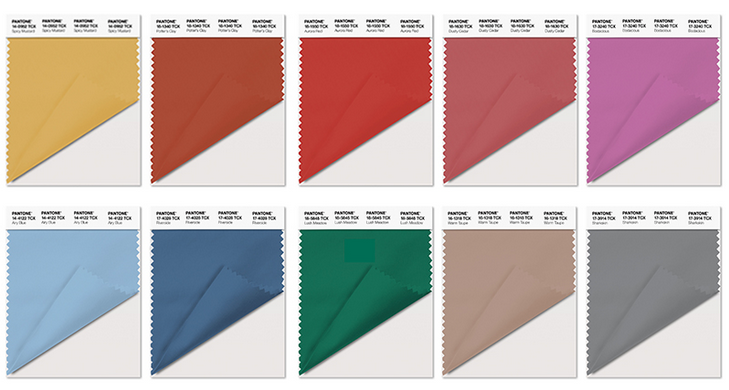
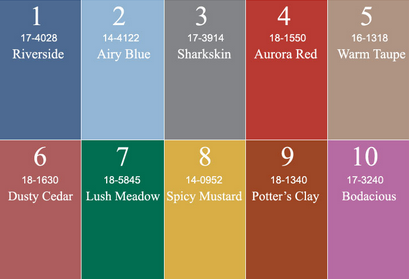
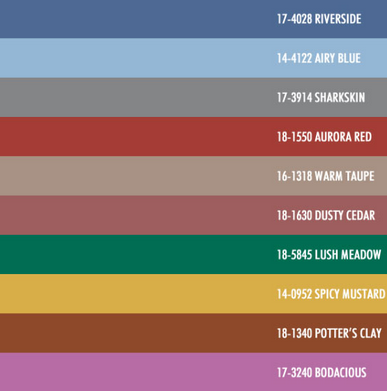
1. Riverside - a cool, calming blue.
2. Airy Blue - a beautiful, medium shade of blue.
3. Sharkskin - a neutral gray, works well paired with almost any other color in the fall palette.
4. Aurora Red - a bold, warm red.
5. Warm Taupe - another neutral, more to the brown, earthy side.
6. Dusty Cedar - a warm, rose toned shade of pink.
7. Lush Meadow - a rich, vibrant shade of green.
8. Spicy Mustard - a spicy, brownish yellow color
9. Potter's Clay - a neutral earth tone. A warm reddish brown tone.
10. Bodacious - a bright, rich purple, more of a red violet color.

We're Changing Our Name to Tiger Gem Store! 12 May 2016 1:15 PM (9 years ago)

 |
| Me and Tiger, 2007 |
When I began to add cabochons and faceted gemstones, there seemed to be quite a need for quality gems at affordable prices. And that is really what took off as far as sales went for the store. So Tiger Bead Store, has really become a gem store. And that is why the name change.
Only the name has changed. The store is still owned and operated solely by myself. You will continue to find quality gemstone cabochons and faceted gems, and superior customer service at Tiger Gem Store. In a few months, I am also going to change the look of the store too, which I am excited about.
 |
| Me and Tiger, 2016 |
Thank you.

Test Your Jewelry Knowledge with Fun Quizzes 21 Apr 2016 11:25 AM (9 years ago)
Found something a little different on the web today that I wanted to share.
The American Gem Society's website has five, just for fun, jewelry quizzes to test your general knowledge on jewelry facts, jewelry in pop culture, celebrity jewels, songs about jewelry, and royal jewelry! These are all timed quizzes. And remember, they are just for fun!
Jewelry Facts Quiz
Jewelry in Pop Culture
Celebrity Marriages and Jewels
Songs About Jewelry
Royal Jewelry

What is Mother of Pearl? 21 Apr 2016 11:25 AM (9 years ago)
 Recently, I received some new mother of pearl cabochons for the store and when I was talking to my husband about them, he asked me, "what is mother of pearl anyway?" And since I could not answer him off the cuff, I decided to look it up for myself and share what I found.
 |
| (By Hannes Grobe/AWI (Own work) [CC BY 3.0 (http://creativecommons.org/licenses/by/3.0)], via Wikimedia Commons) |
Mother of pearl, also called nacre, is a combination of "minerals that are secreted by oysters and other mollusks and deposited inside their shells, coating and protecting them from parasites and foreign objects." Nacre is the same substance that builds up and forms around a small particle or irritant that gets inside mollusk to form a pearl. Because the nacre can take up a the whole of a shell's interior, cabochons, with a larger focal area than pearls, can be cut and shaped from the shell.
 |
| Free form faceted mother of pearl cabochons available at TigerBeadStore.com. |
 |
| Just some of the various shapes we carry in Mother of Pearl cabochons. |
(Some of the information for this post was shared from http://jewelry.about.com/od/pearls/qt/motherofpearl.htm)
%20%5BCC%20BY%203.0%20(http://creativecommons.org/licenses/by/3.0)%5D,%20via%20Wikimedia%20Commons)%20%3C/td%3E%3C/tr%3E%3C/tbody%3E%3C/table%3E%3Cbr%20/%3EMother%20of%20pearl,%20also%20called%20nacre,%26nbsp;%20is%20a%20combination%20of%20%22minerals%20that%20are%20secreted%20by%20oysters%20and%20other%20mollusks%20and%20%20deposited%20inside%20their%20shells,%20coating%20and%20protecting%20them%20from%20%20parasites%20and%20foreign%20objects.%22%26nbsp;%20Nacre%20is%20the%20same%20substance%20that%20builds%20up%20and%20forms%20around%20a%20small%20particle%20or%20irritant%20that%20gets%20inside%20mollusk%20to%20form%20a%20pearl.%26nbsp;%20Because%20the%20nacre%20can%20take%20up%20a%20the%20whole%20of%20a%26nbsp;%20shell's%20interior,%20cabochons,%20%20with%20a%20larger%20focal%20area%20than%20pearls,%20can%20be%20cut%20and%20shaped%20from%20the%20%20shell.%3Cbr%20/%3E%3Cbr%20/%3E%3Ctable%20align%3D%22center%22%20cellpadding%3D%220%22%20cellspacing%3D%220%22%3E%3Ctbody%3E%3Ctr%3E%3Ctd%3E%3Ca%20href%3D%22https://4.bp.blogspot.com/-irnxx4zuRag/VxfgEI_5tQI/AAAAAAAAGhs/t9NC0-21VDon1qvex_gDGAzVSbd293FvQCLcB/s1600/IMG_5117.jpg%22%20imageanchor%3D%221%22%3E%3Cimg%20border%3D%220%22%20height%3D%22400%22%20src%3D%22https://4.bp.blogspot.com/-irnxx4zuRag/VxfgEI_5tQI/AAAAAAAAGhs/t9NC0-21VDon1qvex_gDGAzVSbd293FvQCLcB/s400/IMG_5117.jpg%22%20width%3D%22400%22%20/%3E%3C/a%3E%3C/td%3E%3C/tr%3E%3Ctr%3E%3Ctd%3EFree%20form%20faceted%20mother%20of%20pearl%20cabochons%20available%20at%20TigerBeadStore.com.%3C/td%3E%3C/tr%3E%3C/tbody%3E%3C/table%3E%26nbsp;Mother%20of%20pearl%20is%20optically%20iridescent,%20strong%20and%20resilient.%26nbsp;%20It%20is%20considered%20organic%20in%20nature,%20in%20that%20it%20originates%20from%20a%20living%20creature,%20plant%20or%20organism.%3Cbr%20/%3E%3Cbr%20/%3E%3Ctable%20align%3D%22center%22%20cellpadding%3D%220%22%20cellspacing%3D%220%22%3E%3Ctbody%3E%3Ctr%3E%3Ctd%3E%3Ca%20href%3D%22https://1.bp.blogspot.com/-jIB8PMSE7jw/VxaqoLR5jyI/AAAAAAAAGhc/9Tb0lAsbvjEpvoAyFtOqxK7FQKN_iFkswCLcB/s1600/MOP.jpg%22%20imageanchor%3D%221%22%3E%3Cimg%20border%3D%220%22%20height%3D%22400%22%20src%3D%22https://1.bp.blogspot.com/-jIB8PMSE7jw/VxaqoLR5jyI/AAAAAAAAGhc/9Tb0lAsbvjEpvoAyFtOqxK7FQKN_iFkswCLcB/s400/MOP.jpg%22%20width%3D%22400%22%20/%3E%3C/a%3E%3C/td%3E%3C/tr%3E%3Ctr%3E%3Ctd%3EJust%20some%20of%20the%20various%20shapes%20we%20carry%20in%20Mother%20of%20Pearl%20cabochons.%3C/td%3E%3C/tr%3E%3C/tbody%3E%3C/table%3E%3Cbr%20/%3E%26nbsp;(Some%20of%20the%20information%20for%20this%20post%20was%20shared%20from%20http://jewelry.about.com/od/pearls/qt/motherofpearl.htm)%3Ca%20href%3D%22https://www.blogger.com/By%2520Hannes%2520Grobe/AWI%2520(Own%2520work)%2520%255BCC%2520BY%25203.0%2520(http%253A//creativecommons.org/licenses/by/3.0)%255D,%2520via%2520Wikimedia%2520Commons%22%3E%3C/a%3E)
Use Instagram to Grow Your Jewelry Business 11 Mar 2016 3:15 PM (10 years ago)

 |
| Follow Tiger Bead Store on Instagram... Just Click This Link |
I just started using Instagram and I LOVE it! Being an artist and a visual person, I love to look at photos and images that inspire me. And I have found Instagram fairly intuitive and easy to use.
Instagram is a great social media platform for marketing jewelry because it is so visual. Statistics say that there are over 130 million active users on Instagram every month and everyday, one billion photos are viewed and liked. That is a lot of potential customers for you and your business.
Would you like to know how to use Instagram to market your business? Or how to get more followers and interaction with your brand? I have searched the web and found some great articles with tips to show you some of the best practices you can implement to grow your Instagram following. And increasing your following will consequently help grow your sales.
9 Marketing Techniques I Used to Get 39,000 Instagram Followers
Instagram for Business: Everything You Need to Know
52 Tips: How to Market on Instagram
5 Best Types of Instagram Photos to Drive Engagement
47 Tips for Running an Instagram Photo Contest
Hope you find these articles helpful.
And please follow Tiger Bead Store on Instagram... Just Click this Link

Pantone's Two Colors of the Year for 2016 18 Jan 2016 4:01 PM (10 years ago)

 |
| Photo borrowed from Pantone.com |
 | |||
| Gem suggestions for Pantone's Rose Quartz |


Colored Gemstones for Spring 2016 18 Jan 2016 2:39 PM (10 years ago)
 Fashion trends in clothing and jewelry revolve around Pantone's color forecast every season.
After taking a good look at the color forecast, I like to make my own predictions for gemstones that I believe would be good choices to use in jewelry this year.
Here are a couple of charts showing this spring's fashion colors...


Rose Quartz (color of the year) - Rose Quartz, Pink Opal, Dyed Pink Chalcedony
Serenity (color of the year) - Natural Blue Chalcedony, Aquamarine, Sky Blue Topaz, Blue Lace Agate
Peach Echo - Peach Moonstone, Coral, Apricot Agate
Snorkel Blue - Sapphire, Lapis, Kyanite, London Blue Topaz, Dark Blue Chalcedony (dyed)
Buttercup - Lemon Quartz
Limpet Shell - Sky Blue Topaz, Aquamarine, Amazonite, Apatite, Turquoise, Ocean Blue Chalcedony (dyed)
Lilac Gray- Gray Moonstone
Fiesta - Carnelian, Red Jasper, Red onyx
Iced Coffee - Smokey Quartz, Labradorite
Green Flash - Chrysoprase, Peridot, Prehnite, Emerald
Hope this helps with some of your creative choices this year!
%20-%26nbsp;%20Rose%20Quartz,%20Pink%20Opal,%20Dyed%20Pink%20Chalcedony%3Cbr%20/%3E%3Cb%3E%3Cbr%20/%3E%3C/b%3E%3Cspan%3E%3Cspan%3ESerenity%3C/span%3E%3C/span%3E%20(color%20of%20the%20year)%20-%20Natural%20Blue%20Chalcedony,%20Aquamarine,%20Sky%20Blue%20Topaz,%20Blue%20Lace%20Agate%3Cbr%20/%3E%3Cb%3E%3Cbr%20/%3E%3C/b%3E%3Cspan%3E%3Cspan%3EPeach%20Echo%3C/span%3E%3C/span%3E%20-%20Peach%20Moonstone,%20Coral,%20Apricot%20Agate%3Cbr%20/%3E%3Cb%3E%3Cbr%20/%3E%3C/b%3E%3Cspan%3E%3Cspan%3ESnorkel%20Blue%3C/span%3E%3C/span%3E%20-%20Sapphire,%20Lapis,%20Kyanite,%20London%20Blue%20Topaz,%20Dark%20Blue%20Chalcedony%20(dyed)%3Cbr%20/%3E%3Cbr%20/%3E%3Cspan%3E%3Cspan%3EButtercup%3C/span%3E%3C/span%3E%20-%20Lemon%20Quartz%3Cbr%20/%3E%3Cspan%3E%3Cspan%3E%3Cbr%20/%3E%3C/span%3E%3C/span%3E%3Cspan%3E%3Cspan%3ELimpet%20Shell%3C/span%3E%3C/span%3E%20-%20Sky%20Blue%20Topaz,%20Aquamarine,%20Amazonite,%20Apatite,%20Turquoise,%20Ocean%20Blue%20Chalcedony%20(dyed)%3Cbr%20/%3E%3Cbr%20/%3E%3Cspan%3E%3Cspan%3ELilac%20Gray%3C/span%3E%3C/span%3E-%20Gray%20Moonstone%3Cbr%20/%3E%3Cbr%20/%3E%3Cspan%3E%3Cspan%3EFiesta%3C/span%3E%3C/span%3E%20-%20Carnelian,%20Red%20Jasper,%20Red%20onyx%3Cbr%20/%3E%3Cbr%20/%3E%3Cspan%3EIced%20Coffee%3C/span%3E%20-%20Smokey%20Quartz,%20Labradorite%3Cbr%20/%3E%3Cbr%20/%3E%3Cspan%3EGreen%20Flash%3C/span%3E%20-%20Chrysoprase,%20Peridot,%20Prehnite,%20Emerald%3Cbr%20/%3E%3Cbr%20/%3E%3Cb%3E%3Ci%3EHope%20this%20helps%20with%20some%20of%20your%20creative%20choices%20this%20year!%20%3C/i%3E%3C/b%3E)
Top 15 Most Popular Social Networking Sites 18 Mar 2015 3:35 PM (11 years ago)
As creative entrepreneurs, I believe we all have a limited amount of time to devote to marketing and social media outreach. Because of this, I thought it would be helpful to let you know what I have found to be the most popular social media sites, currently.
eBizMBA.com, an online business guide that helps people find the web's best resources to grow an online business, ranked each of the following website's Alexa Global Traffic Rank, and U.S. Traffic Rank and came up with these results:
1. Facebook
2. Twitter
3. Linked In
4. Pinterest
5. Google Plus+
6. Tumblr
7. Instagram
8. VK
9. Flickr
10. Vine
11. Meetup
12. Tagged
13. Ask.fm
14. MeetMe
15. Classmates
Of course, if you are an Etsy seller, I would also recommend being active in the Forums and Teams. I have found both places helpful for information, sharing, and letting other people know within the Etsy community about your business.
This has been updated to reflect the most current ranking as of March 2015.
Hope this information is helpful for you with your business marketing.
November's Birthstone, Citrine 19 Nov 2014 12:43 PM (11 years ago)

 |
| Citrine Bullet Cabochons |
Citrine is any quartz crystal or cluster that is yellow or orange in color. Most citrines on the market have been heat treated. Specimens of low grade, inexpensive amethyst or smoky quartz are often cooked at high temperatures to produce the more profitable orange yellow citrine. This is because natural citrine is found only in large quartz deposits in small amounts. Citrines whose colors have been produced by artificial means tend to have much more of an orange or reddish cast than those found in nature, which are usually a pale yellow.
Citrine is found most frequently in Brazil, Bolivia, and Spain.
 |
| Citrine Round Cabochons |
Known as the "healing quartz," this golden gemstone is said to support vitality, energy and health while encouraging and guiding hope, energy and warmth within the wearer.
Information shared from:
Bernadine Fine Art Jewelry, Amethyst Galleries, Inc. and The AmericanGemSociety

Rings and Finger Significance 25 Sep 2014 10:13 AM (11 years ago)


It is the fourth finger of human hand and people call it ring finger because it is believed that this finger of the left hand has a direct connection with the heart. It is a magical finger that a married couple wears rings on it to declare their eternal love for each other. This finger is also called Apollo because Apollo is the cultivation of love, beauty and energy. Wearing a ring on the right hand would help you to become more optimistic in your life. And it is advised that moonstone and jade are the perfect stones for the ring.
Thumb
As the first finger of human hand, it is the most independent finger. The thumb is connected with inner heart of a person. Wearing a ring on this finger on left hand indicates that you like to impose your will on others. Whatever, it will help boost your willpower. And you can wear it on the other thumb to show your ability to submit others' will. But please be attentive to any changes that occur in the time if you are wearing a ring on this finger. Perfect stones for thumb are ruby and garnet.
Index finger
This second finger is related to Jupiter which represents a certain kind of power. Kings in the ancient times wore rings on their index finger to show their power. Wearing a ring on this finger on the left hand means owning the ability to lead and the confidence that other will follow your leadership. And it represents being willing to take a less dominant role if you wear a ring on the other index finger. Blue topaz and amethyst rings are good for this finger.

Middle finger
It is related to Saturn and symbolizes a balanced life. Wearing a ring on the left middle finger represents the ability to tell right from wrong. While wearing it on the right middle finger means the tendency to look to others to provide guidance. It's better for you to wear quartz and coral ring on this finger.
Pinkie
People connect this finger with Mercury who is the energy of communication. And wearing a ring on the left little finger indicates you are a strong communicator, while wearing a ring on the right little finger means you are easy to understand what others are trying to explain.
%20%3C/div%3E%3Cdiv%3E%3C/div%3E%3C/div%3E%3Cbr%20/%3E%3Cbr%20/%3E%3Cbr%20/%3E)
Folklore of Sapphire, September's Birthstone 22 Sep 2014 3:46 PM (11 years ago)


Ancient civilizations believed that the world was set upon an enormous sapphire, which painted the sky blue with its reflection.
Ancient Persians called sapphire the “Celestial Stone.” It was the gem of Apollo, Greek God of prophesy and was worn by worshipers visiting his shrine in Delphi to seek his help. It was used by ancient Etruscans as far back as the 7th century B.C.
The sapphire was said to represent the purity of the soul. Before and during the Middle Ages, it was worn by priests as protection from impure thoughts and temptations of the flesh. Medieval kings of Europe valued these stones for rings and brooches, believing that it protected them from harm and envy. Warriors presented their young wives with sapphire necklaces so they would remain faithful. It was believed that the stone’s color would darken if worn by an adulterer or adulteress, or by an unworthy person.

Sapphires were once believed to be protection against snakes. It was said that if poisonous reptiles and spiders were placed in a jar containing the stone, the creatures would immediately die. The French of the 13th century believed that sapphire transformed stupidity to wisdom, and irritability to good temper. It was also believed that if the sapphire was ground to a powder an ingested, it would cure colic, rheumatism and mental illness, and also improve eyesight.
,%20and%20the%20Greek%20word%20%3Ci%3Esappheiros%3C/i%3E%20for%20the%20island%20of%20Sappherine%20in%20the%20Arabian%20Sea%20where%20sapphires%20were%20%20found%20in%20ancient%20Grecian%20times.%3Cbr%20/%3E%3Cbr%20/%3EAncient%20civilizations%20believed%20that%20the%20world%20was%20set%20upon%20%20an%20enormous%20sapphire,%20which%20painted%20the%20sky%20blue%20with%20its%20reflection.%3Cbr%20/%3E%3Cbr%20/%3EAncient%20Persians%20called%20sapphire%20the%20%20%E2%80%9CCelestial%20Stone.%E2%80%9D%20It%20was%20the%20gem%20of%20Apollo,%20Greek%20God%20of%20prophesy%20and%20%20was%20worn%20by%20worshipers%20visiting%20his%20shrine%20in%20Delphi%20to%20seek%20his%20help.%20%20It%20was%20used%20by%20ancient%20Etruscans%20as%20far%20back%20as%20the%207th%20century%20B.C.%3Cbr%20/%3E%3Cbr%20/%3EThe%20sapphire%20was%20said%20to%20represent%20the%20purity%20of%20the%20soul.%20Before%20and%20%20during%20the%20Middle%20Ages,%20it%20was%20worn%20by%20priests%20as%20protection%20from%20%20impure%20thoughts%20and%20temptations%20of%20the%20flesh.%20Medieval%20kings%20of%20Europe%20%20valued%20these%20stones%20for%20rings%20and%20brooches,%20believing%20that%20it%20protected%20%20them%20from%20harm%20and%20envy.%20Warriors%20presented%20their%20young%20wives%20with%20%20sapphire%20necklaces%20so%20they%20would%20remain%20faithful.%20It%20was%20believed%20that%20%20the%20stone%E2%80%99s%20color%20would%20darken%20if%20worn%20by%20an%20adulterer%20or%20adulteress,%20or%20%20by%20an%20unworthy%20person.%3Cbr%20/%3E%3Cdiv%3E%3Ca%20href%3D%22http://2.bp.blogspot.com/-jwKx73TJgOs/UjniKSbSqnI/AAAAAAAAGBU/uFy3FVsp4yo/s1600/Picture+6.png%22%20imageanchor%3D%221%22%3E%3Cimg%20border%3D%220%22%20src%3D%22http://2.bp.blogspot.com/-jwKx73TJgOs/UjniKSbSqnI/AAAAAAAAGBU/uFy3FVsp4yo/s320/Picture+6.png%22%20height%3D%22286%22%20width%3D%22320%22%20/%3E%3C/a%3E%3C/div%3E%3Cbr%20/%3ESapphires%20were%20once%20believed%20to%20be%20protection%20against%20snakes.%20It%20was%20%20said%20that%20if%20poisonous%20reptiles%20and%20spiders%20were%20placed%20in%20a%20jar%20%20containing%20the%20stone,%20the%20creatures%20would%20immediately%20die.%20The%20French%20of%20%20the%2013th%20century%20believed%20that%20sapphire%20transformed%20stupidity%20to%20%20wisdom,%20and%20irritability%20to%20good%20temper.%26nbsp;%20It%20was%20also%20believed%20that%20if%20the%20sapphire%20was%20ground%20to%20a%20powder%20an%20ingested,%20it%20would%20cure%20colic,%20rheumatism%20and%20mental%20illness,%20and%20also%20improve%20eyesight.%26nbsp;%20%3Cbr%20/%3E%3Cbr%20/%3E)
September's Birthstone, Sapphire 18 Sep 2014 11:01 AM (11 years ago)


Typically, sapphires appear as blue stones, ranging from very pale blue to deep indigo, due to the presence of small amounts of titanium and iron within the crystal structure. The most valued shades of blue range from the medium-deep cornflower blue to medium dark blue, or slightly violetish blue.
Sapphires also occur in other natural colors and tints – colorless, gray, yellow, pale pink, orange, green, violet and brown – called fancy sapphires. These different colors are caused by different kinds of impurities within the crystal. For example, yellow sapphires get their color from ferric iron, and colorless gems have no contaminants.

Sapphires are commonly heated to improve their color and reduce cloudiness that is caused by inclusions. The inclusions are responsible for the "star" or "cat's eye" in star sapphires.
One of the most famous sapphires rests on the Imperial State Crown, worn by Queen Victoria in 1838. It resides in the British Crown Jewels in the Tower of London. This gem is called the St. Edward’s Sapphire because it once belonged to Edward the Confessor, who wore the stone on a ring during his coronation in 1042.
(Parts of this post are being shared from the website Earthsky.org)
%3C/i%3E%3Cbr%20/%3E%3Cbr%20/%3E%3Cbr%20/%3E%3Cbr%20/%3E%3Cbr%20/%3E%3Cbr%20/%3E%3Cdiv%3E%3Cdiv%3E%3Ctable%3E%3Ctbody%3E%3Ctr%3E%3Ctd%3E%3Cbr%20/%3E%3C/td%3E%3Ctd%3E%3Ctable%3E%3Ctbody%3E%3Ctr%3E%3Ctd%3E%3Cbr%20/%3E%3C/td%3E%3C/tr%3E%3Ctr%3E%3Ctd%3E%3Cbr%20/%3E%3C/td%3E%3C/tr%3E%3Ctr%3E%3Ctd%3E%3Cbr%20/%3E%3C/td%3E%3C/tr%3E%3C/tbody%3E%3C/table%3E%3C/td%3E%20%20%20%20%20%20%20%20%3C/tr%3E%3C/tbody%3E%20%3C/table%3E%3C/div%3E%3C/div%3E%3Cdiv%3E%3C/div%3E%3Cbr%20/%3E%3Cbr%20/%3E)
Spring Butterfly Pendant Tutorial 24 Jul 2014 11:24 AM (11 years ago)
I just found this website called Slideshare which has jewelry tutorials on it to share.
This tutorial is for a wire wrapped stud earrings with crystal beads. It is called the "Spring Butterfly Pendant Tutorial," and it is by Kasia of Kica Bijoux for House of Gems.
July's Birthstone, Ruby 11 Jul 2014 11:38 AM (11 years ago)


July's birthstone, the ruby, is among the most highly prized of gemstones. Large rubies are harder to find than large diamonds, emeralds and sapphires. As a result, rubies’ value increases with size more than any other gemstone.
Ruby is a pink to blood-red colored gemstone, a variety of the mineral corundum, also known as aluminum oxide. The red color is caused mainly by the presence of the element chromium. It is harder than any natural gemstone except diamond, which means a ruby is durable enough for everyday wear.

Prices of rubies are primarily determined by color. The brightest and most valuable "red" called pigeon blood-red, commands a large premium over other rubies of similar quality. After color follows clarity: similar to diamonds, a clear stone will command a premium price. Cut and carat weight would be the last determining factors in pricing a ruby.
All natural rubies have imperfections in them, including color impurities and inclusions of rutile needles known as "silk". Gemologists use these needle inclusions found in natural rubies to distinguish them from synthetics, or substitutes. Almost all rubies today are treated in some form, with heat treatment being the most common practice. Rubies that are completely untreated and are of excellent quality, command a large premium.

Rubies come from all over the world but good gemstones are found in India, Madagascar, Zimbabwe, North Carolina in the U.S., Afghanistan, Pakistan, Sri Lanka, Kenya, Tanzania, Kampuchea, and perhaps most notably, Burma. The Mogok valley of Upper Burma is famous as the source for the finest and rarest rubies of all, the pigeon blood-red, named for the stones’ intense red color. Another major source of rubies is Thailand, well-known for dark, brownish-red rubies. Both Thailand and Burma regard the ruby as their national stone.
(Information shared from the websites: American Gem Society and Earth Sky.)
%3Cbr%20/%3E%3Cbr%20/%3E%3Cbr%20/%3E%3Cbr%20/%3E%3Csup%3E%3C/sup%3E%3Cbr%20/%3E%3Csup%3E%3Ca%20href%3D%22http://en.wikipedia.org/wiki/Ruby%23cite_note-1%22%3E%3C/a%3E%3C/sup%3E%3Cbr%20/%3E)
History of the Wedding Ring 4 Jun 2014 10:35 AM (11 years ago)

 The history of the wedding ring began in Northern Africa with the Egyptians. Egyptians settled along the fertile Nile river gathered sedges, rushes and reeds from the flood plains and twisted and braided them into rings for fingers and larger ones for bracelets. The Egyptians believed that the circle was the symbol of eternity, and so then, were the rings.
These rings were worn on the same finger as today, the fourth finger of the left hand, because it was believed that finger had a vein that led directly from the heart. When the Greeks conquered Egypt, they carried on this tradition, and then it passed onto the Romans. The Romans also believed in the ring finger and the vein from the heart, but instead of giving the ring as a token of love, it was seen as a symbol of ownership. A man laid claim to his woman with giving the ring.
These early wedding rings lasted at most a year from regular wear and so other materials were sought after for use. Leather, bone and ivory were then fashioned into rings and used in the same way.
In Asia, puzzle rings were popular for wedding rings. These rings came apart if they were taken off the hand and than had to be put back together by someone who had the knowledge to do it. Middle Eastern men often gave these rings to their wives as a way of knowing if they were being loyal to them or not. Remember, if the ring came off, it came apart. Very clever.
The earliest known wedding rings made of metal were very akward and unrefined. Gemstones were added to make them more attractive. This can be seen in Eqyptian heiroglyphs. At this time, jewelry was more to show wealth than for sentimental reasons.
In early Rome, iron was the chosen metal for rings while others were using copper or brass. Iron symbolized the strength of a man's love for his wife. It also was a sign of ownership. The woman became the property of the man. Silver became the metal of choice in 17th century England and France. Poesy, or posy rings, were widely popular then. These were rings inscribed with a love poem, and some reference to faith and hope included in the verse. Silver was also popular in renaissance Italy for engagement rings, decorated with enamel engraving.
In medieval Europe, coinage gold was used to make rings, with gemstones added. Rubies were often chosen because their color red was like the color of the heart. Sapphires and diamonds were also used.
Today, both engagement rings and wedding rings are very special pieces of jewelry. Gold, white gold, platinum and titanium are currently the metals of choice. As in ancient times, wedding rings are not only used for adornment, but are symbolic of love, fidelity and commitment. The wearing of wedding rings, which began in ancient times, is still a recognizable symbol of the union of a man and woman in matrimony.
(Article sources: Ezine Articles, "The History of Engagement Rings and Wedding Bands" by Reno Charlton and "The History of the Wedding Ring-A Recognizable Symbol of Love" by Matt Jacks)
%3Cbr%20/%3E%3Cbr%20/%3E%3Ca%20href%3D%22http://www.addthis.com/bookmark.php%22%20target%3D%22_blank%22%20title%3D%22Bookmark%20and%20Share%22%3E%3Cimg%20alt%3D%22Bookmark%20and%20Share%22%20border%3D%220%22%20src%3D%22http://s9.addthis.com/button1-bm.gif%22%20height%3D%2216%22%20width%3D%22125%22%20/%3E%3C/a%3E)
Wire Wrap Stud Earrings Tutorial 28 May 2014 11:19 AM (11 years ago)
I have another tutorial found on the website Slideshare for House of Gems.
This tutorial is for wire wrapped stud earrings. Very pretty. The tutorial is called "Mulberry Post Earring Tutorial," and it is by Colette Kimon.
Wire Woven Side Drilled Pendant Tutorial 22 Apr 2014 12:00 PM (11 years ago)
I found this wire wrapped tutorial on The Beading Gem's Journal. It is for a beautiful woven wire pendant called the "Arcadian Legends Pendant," and the tutorial is by Colette Simon. Colette uses copper wire, and it looks beautiful in that, but I bet silver wire would look lovely too. You could probably use different sizes and shapes of beads to personalize the design. The possibilities are endless.
The slides for this tutorial make it a fairly easy project for all levels of wire wrappers.
FREE Simple Wire Wrapped Heart Ring Tutorial 25 Mar 2014 11:55 AM (12 years ago)
 I love rings, and I love wire wrapped jewelry. So when I saw this tutorial, I was very excited. I think this ring is beautiful. And the designer of the ring, Copar Aingeal, says it is easy to make. That is always a plus.
I first saw this ring while scanning Facebook. It was offered on the business page for Jewelry Making Club. Jewelry Making Club has a pretty interesting page for beaders, and quite often, they have free jewelry making patterns.

Copar, the designer, says this about the ring: "This is a very simple and sweet wire wrapped heart ring. It makes up very quickly and can be as fancy as you want it to be. Try using 2-3mm gemstone beads. Or keep it simple and have fun with colored craft wire and seed beads."
She also goes on to say the ring can be sized to fit. The beaded heart on top is about 1/2-3/4", just depending on how big you want it to be.
Your materials list is fairly simple:
- 8 inches of 20 guage wire for the frame
- 3.5 feet of 24 guage wire for the wrapping
- and 16-20 2mm seed or gemstone beads
- wire cutters
- needle nose pliers
- chain nose pliers
- ruler
- ring mandrel for sizing
- optional tool - flat nylon jaw

3 Important Lessons I Learned That Doubled My Business in 2013 18 Mar 2014 11:46 AM (12 years ago)
 Last year, my bead store grew incredibly. My sales more then doubled from the previous year. Want to know what I learned that helped increase my sales? These are the 3 most important lessons I learned in business in 2013.
OK, I do have to say that I had more time for my business last year. I opened Tiger Bead Store online in August of 2007 and for the first 5 1/2 years, was only able to work it part-time because I also had a "regular" job. Last year was the first year I was able to devote all of my time to growing my business. That helps.
That being said, I have found these to be the MOST important lessons I have learned...
Lesson 1 - You have to have great product that people want to buy.

When I started Tiger Bead Store, I started with selling beads. And then I began adding other beading and jewelry making supplies that I liked and wanted to share. Crystals, stampings, etc. When I added gemstones, my business really began to grow. I was filling a need and desire that people wanted, and then that became my business's niche. That's what sells well for me. I try every now and then to add new supplies, but the bulk of my business is gemstones. So that is where I spend my money and focus my attention. To finding and selling the best gemstones that I can.
Lesson 2 - Answer your emails as quickly as possible.

Lesson 3 - Quick shipping.

I think the most important thing here is communication. In your policies, let it be know how often you ship, ex. every 1-3 business days, etc. This will give your customer a realistic idea before hand as to what to expect. And if you can get your product out faster, that is always another way to WOW them. Of course, if you take more time than you agreed to in your policies, contact the customer. Communicate with them. This can often diffuse a negative situation.
______________________________________________________________
These tips are not rocket science, as you can see, but I believe they are the foundation to growing an online business. They have helped me grow my business, and I think they can help you with yours.

Human Hair Jewelry 11 Mar 2014 12:09 PM (12 years ago)
 Human hair jewelry? I had never heard about this before until reading the Etsy forums. Someone started a post about making human hair jewelry. Another person commented on the fact that people used to make memorial jewelry including the hair of a deceased loved one, to remember them by.
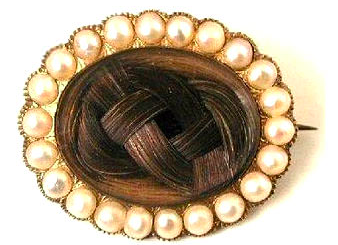 |
| Victorian Pendant - Gold, Pearls and Human Hair |
Jewelry fashioned from hair actually began in Georgian times, but it became very widespread during the Victorian era. Victorian hair work jewelry was produced not only by professionals, but also as a pastime by Victorian ladies and gentlemen. Hair work was as popular as crocheting or tatting in the late 1850’s. Victorian hair work jewelry served not only as a memento to remember the dead, but also as “love tokens” to keep dear ones close. These precious locks of hair were often kept in special compartments on the back of brooches, rings, lockets or watch fobs.
 |
| Victorian Locket - Photo courtesy of SmithsonianMagazine.com |
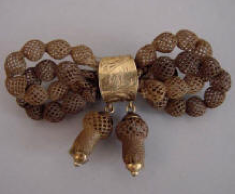 |
| Victorian hair bow pin. This photo is from the reprint of "The Art of Hair Work, 1875" by Mark Campbell, page 144. |
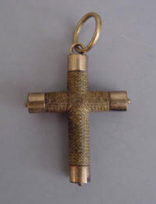 |
| Hair woven on gold cross pendant. From Bell's "Collector's Encyclopedia of Hairwork Jewelry" page 124. |
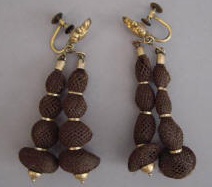 |
| Victorian hair double dangle earrings of table work and gold fittings. |
After the death of Prince Albert of England in 1861, hair was often taken from the deceased (both adults and children) and incorporated into pieces of mourning jewelry.
You can find many more examples of hair jewelry on the website, Morning Glory Antiques and Jewelry.
________________________________________________________
This information is courtesy of The Antique Jewelry University
Photos courtesy of Morning Glory Antiques and Jewelry.
%20and%20incorporated%20into%20pieces%20of%20mourning%20jewelry.%3Cbr%20/%3E%3Cbr%20/%3EYou%20can%20find%20many%20more%20examples%20of%20hair%20jewelry%20on%20the%20website,%20%3Ca%20href%3D%22http://www.morninggloryjewelry.com/victorian-hair-jewelry-aid-52.html%22%3EMorning%20Glory%20Antiques%20and%20Jewelry.%26nbsp;%3C/a%3E%3Cbr%20/%3E________________________________________________________%20%3Cbr%20/%3E%3Cbr%20/%3E%3Cspan%3E%3Cspan%3EThis%20information%20is%20courtesy%20of%20%3Ca%20href%3D%22http://www.antiquejewelryuniversity.com/%22%3EThe%20Antique%20Jewelry%20%20University%3C/a%3E%26nbsp;%26nbsp;%3C/span%3E%3C/span%3E%3Cbr%20/%3E%3Ch2%3E%3Cspan%3E%3Cspan%3EPhotos%20courtesy%20of%20%3Ca%20href%3D%22http://www.morninggloryjewelry.com/victorian-hair-jewelry-aid-52.html%22%3EMorning%20Glory%20Antiques%20and%20Jewelry.%3C/a%3E%20%3C/span%3E%3C/span%3E%3C/h2%3E)
Mohs Scale of Hardness for Gemstones 27 Feb 2014 10:34 AM (12 years ago)
 Have you ever heard of the Mohs scale and wondered what it was? I have read about it in reference to the hardness of gemstones over and over, but I decided I wanted to know more about, it so I did some research. This is what I found.
The Mohs scale was created in 1812 by the German geologist and mineralogist Friedrich Mohs. Minerals were tested for hardness by scrathing one material against another, and seeing which was the harder substance. Hardness refers to a minerals resistance to scratching. Then they were rated by which was more scratch resistant than the other.
The scale shows the hardness of minerals in a range of 1 to 10 where talc at 1 is the softest and diamond at 10 is the hardest. On this scale minerals with higher Mohs numbers can scratch minerals with lower Mohs numbers.
Here is a sample of some gemstones and where they rate on the Mohs Scale.

 |
| This graph is taken from Wikipedia |
 |
| This graph is taken from Wikipedia. |
